Sunday, October 18, 2026
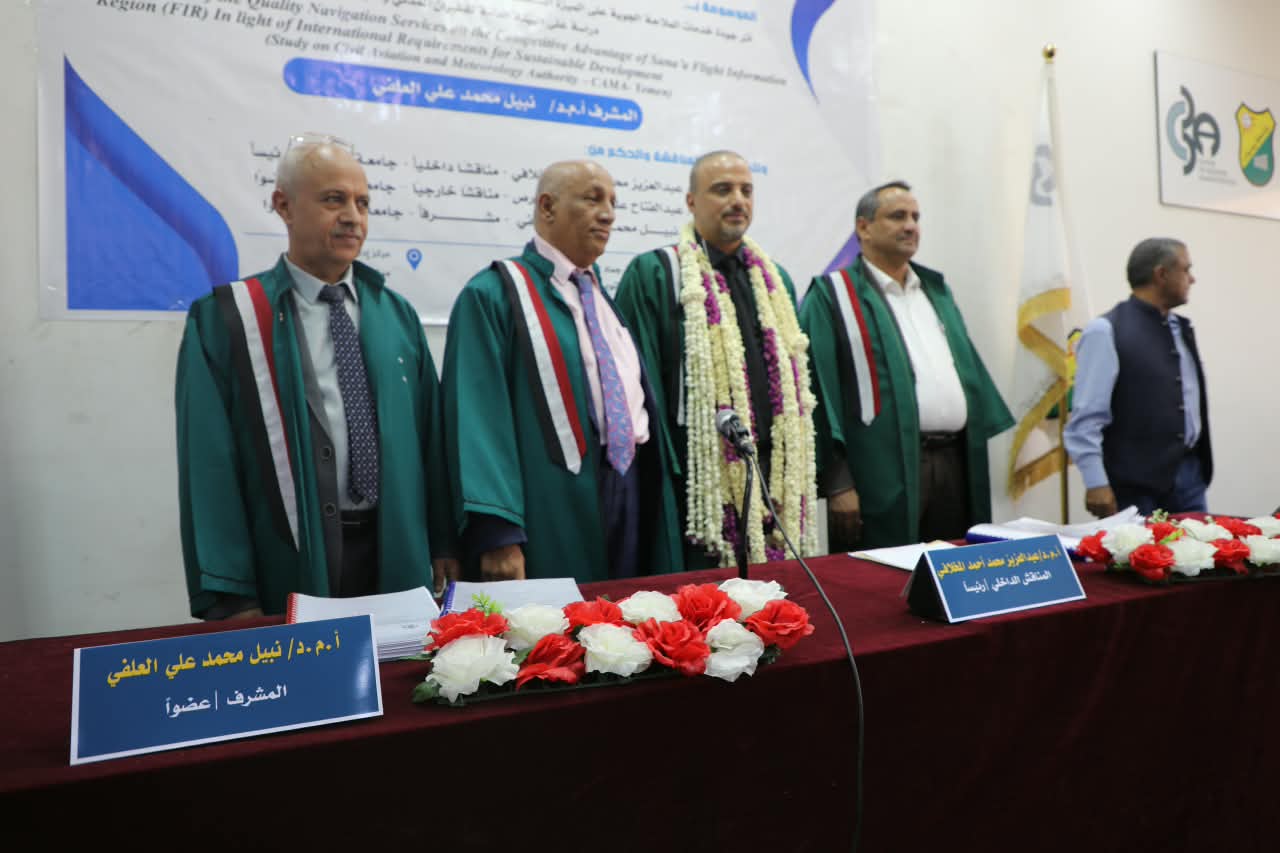
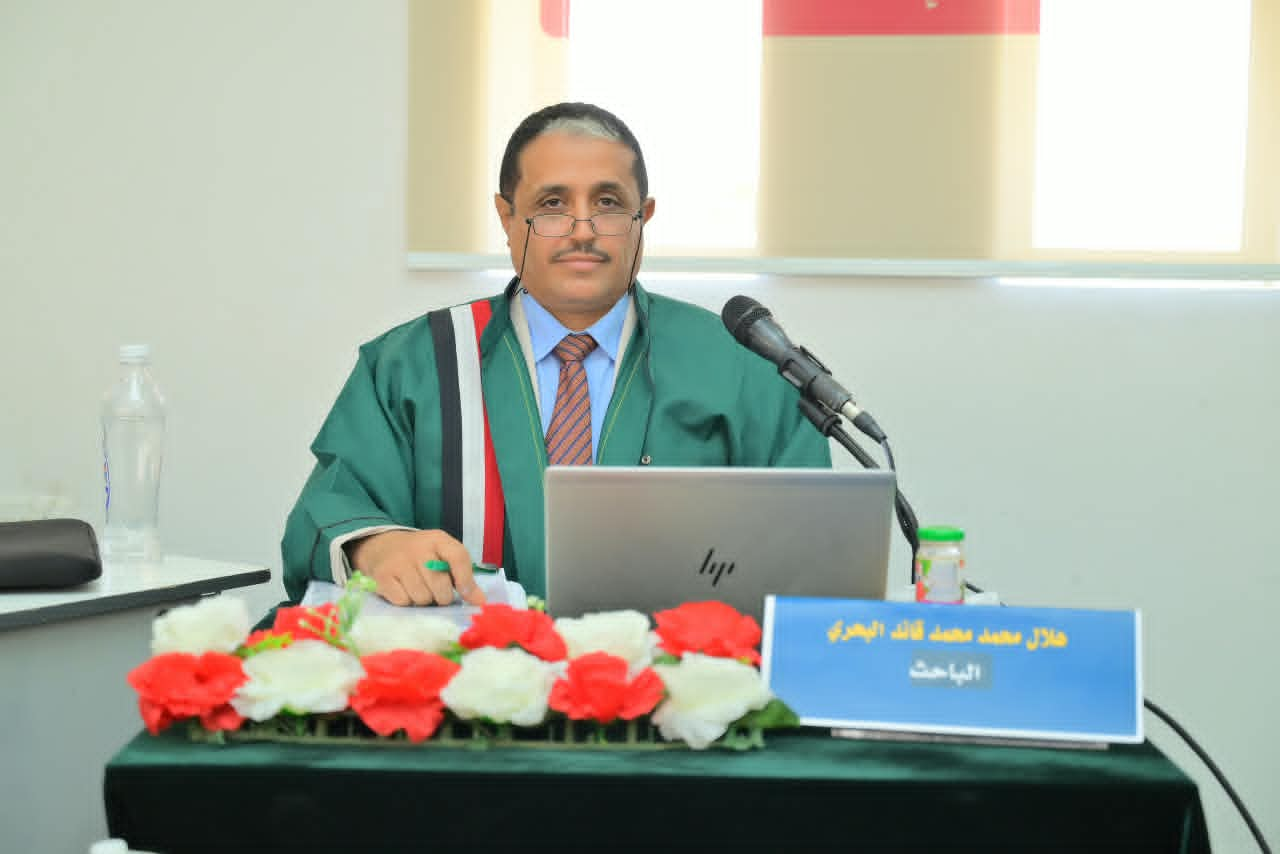
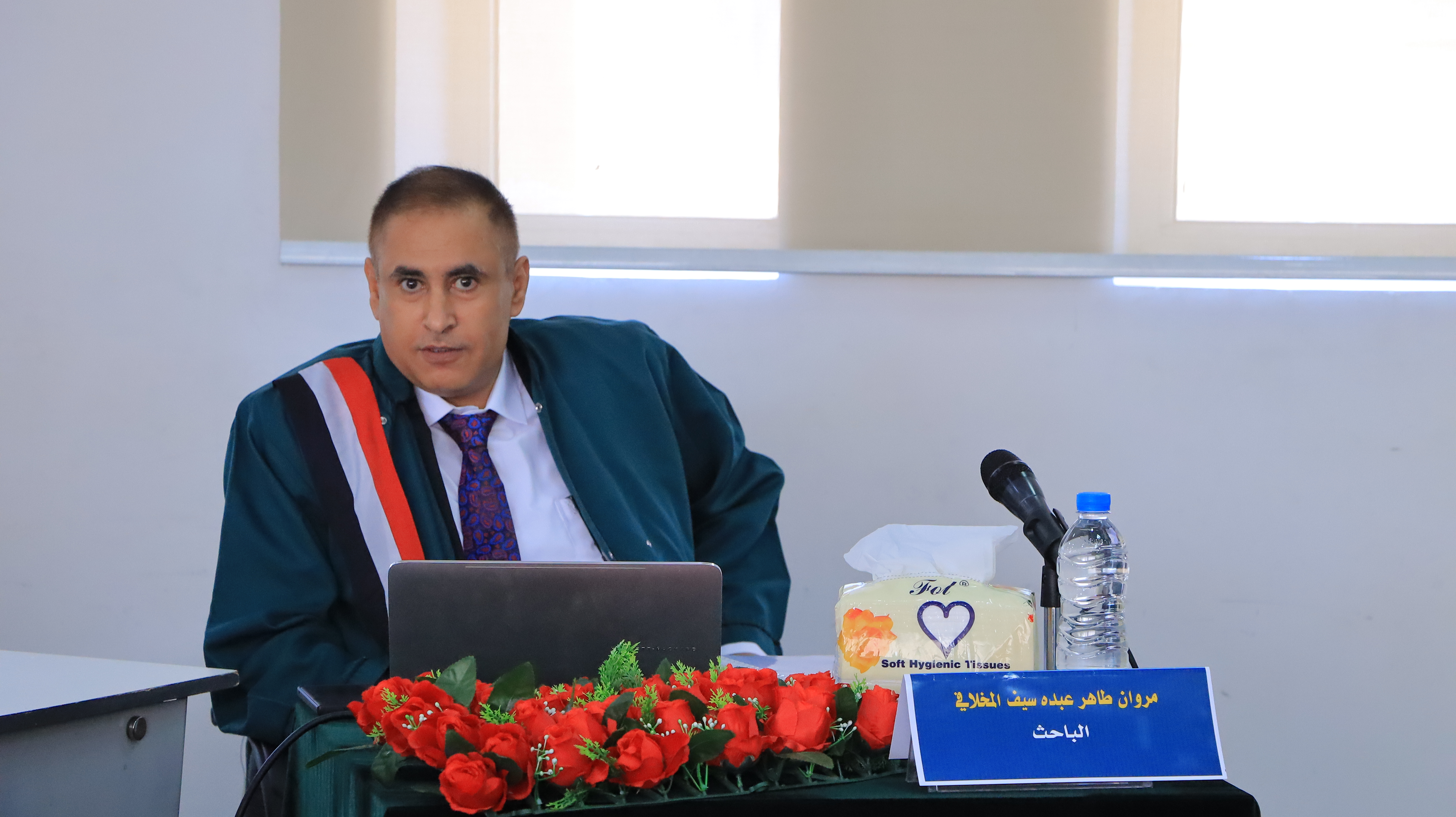
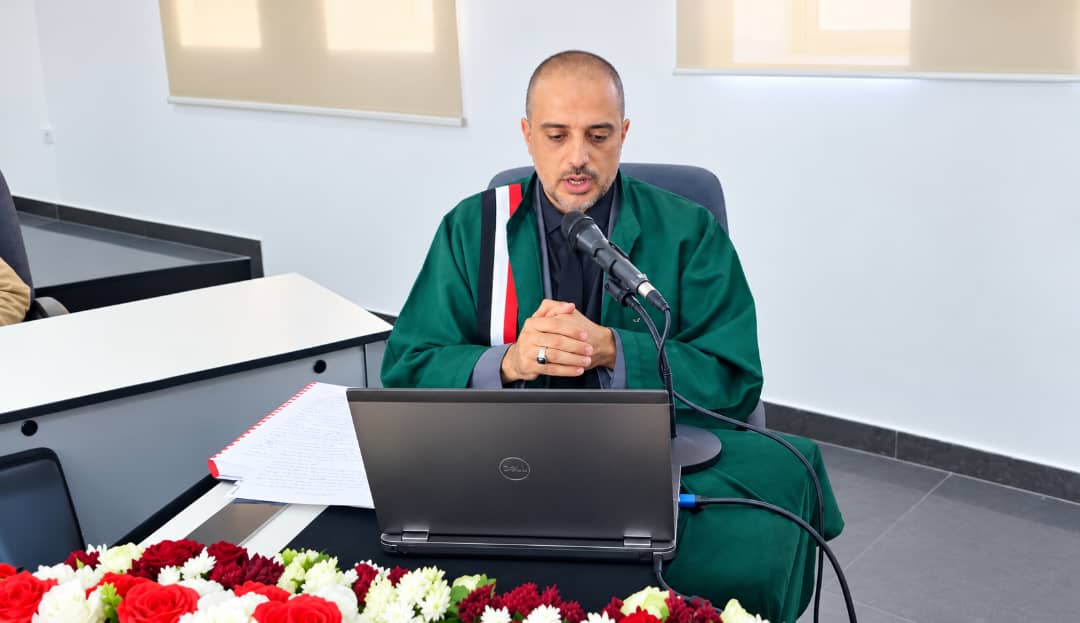
Researcher Ashraf Yahya Ahmed Shunaif was awarded a PhD degree in Business Administration by the Business Administration Center for Graduate Studies at Sana’a University for his dissertation entitled: “The Impact of Air Navigation Services Quality on the Competitive Advantage of the Sana’a Flight Information Region in Light of International Sustainable Development Requirements: A Study of the General Authority of Civil Aviation and Meteorology.” The dissertation was supervised by Dr. Nabil Mohammed Ali Al-Alfi, Associate Professor of Business Administration at Amran University.
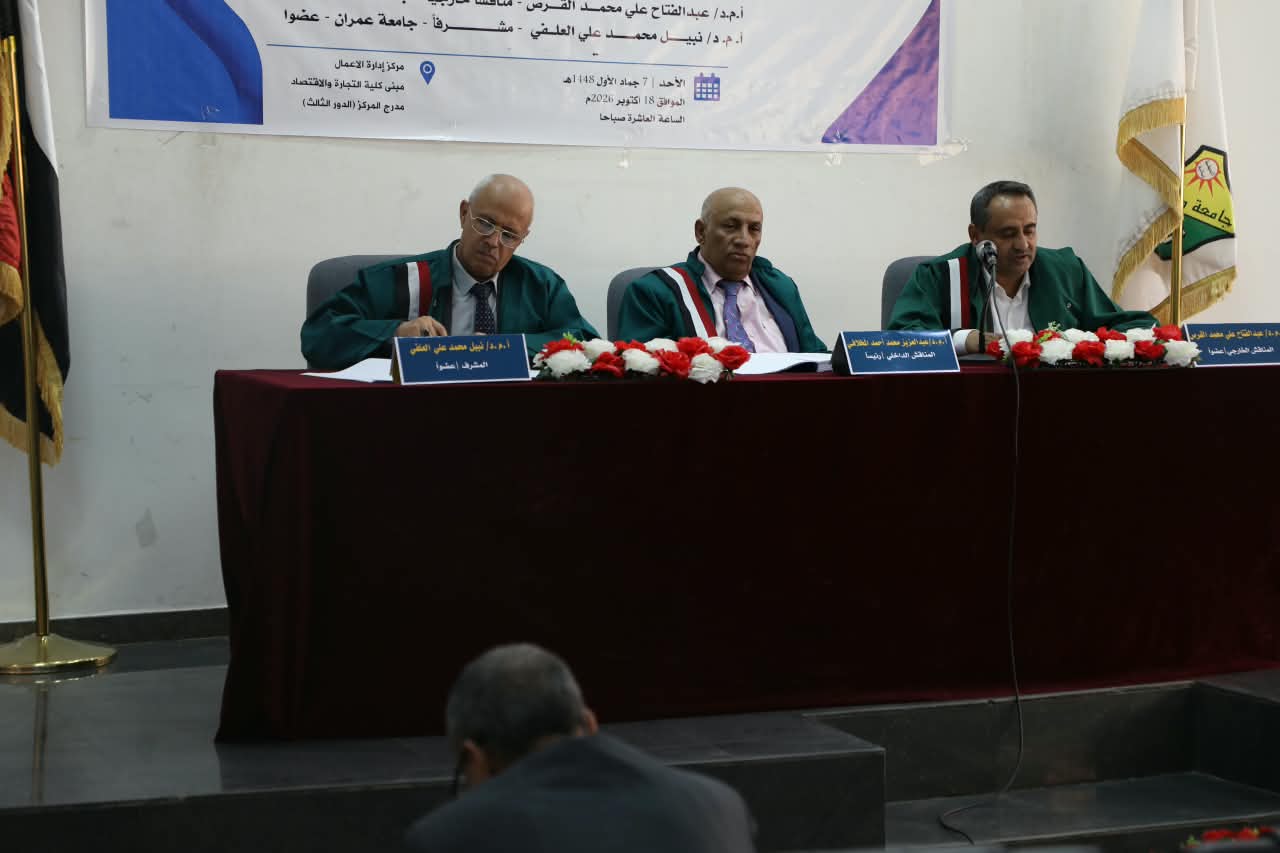
The PhD Viva-Voce Committee consisted of the following:
- Assoc. Prof. Dr. Abdulaziz Mohammed Al-Mekhlafi- Sana’a University – Internal Examiner and Committee Chair.
- Assoc. Prof. Dr. Abdul-Fattah Ali Al-Qurs- Amran University – External Examiner.
- Assoc. Prof. Dr. Nabil Mohammed Al-Alfi- Amran University – Supervisor and Committee Member.
The study aimed to examine the impact of air navigation services quality on the competitive advantage of the Sana’a Flight Information Region in light of international sustainable development requirements at the General Authority of Civil Aviation and Meteorology in the Republic of Yemen. To achieve this objective, the study adopted a quantitative approach using a descriptive-analytical method. A questionnaire was used to collect primary data on the independent variable (air navigation services quality), the dependent variable (the competitive advantage of the Sana’a Flight Information Region), and the mediating variable (international sustainable development requirements). A census approach was employed, and the questionnaire was distributed to 120 employees and air traffic controllers in the Authority’s air navigation sector, of whom 98 responded. The data were analyzed using the Statistical Package for the Social Sciences (SPSS). The study yielded the following findings:
- , according to the respondents’ perceptions. The reliability dimension ranked highest, with a mean of 5.699 and a standard deviation of 1.082, while the tangibility dimension ranked lowest, with a mean of 3.578 and a standard deviation of 1.152. The overall mean for air navigation services quality was 5.044, with a standard deviation of 0.991. These findings answered the second main research question and fulfilled the study’s fifth objective.relatively highThe level of air navigation services quality in the Sana’a Flight Information Region was found to be
- , according to the respondents’ perceptions. The strategic location dimension ranked highest, with a mean of 4.747 and a standard deviation of 1.144, while the creativity and innovation dimension ranked lowest. The overall mean for competitive advantage was 4.173, with a standard deviation of 1.096. These findings answered the third main research question and fulfilled the study’s sixth objective.moderateThe level of competitive advantage of the Sana’a Flight Information Region was found to be
- , according to the respondents’ perceptions. The economic dimension ranked highest, with a mean of 3.963 and a standard deviation of 1.446, while the environmental dimension ranked lowest, with a mean of 2.590 and a standard deviation of 1.333. The overall mean for international sustainable development requirements was 3.323, with a standard deviation of 1.135. These findings answered the study’s fourth research question and fulfilled its seventh objective.relatively lowThe level of international sustainable development requirements was found to be
The study proposed a set of recommendations aimed at improving air navigation services quality and strengthening the competitive advantage of the Sana’a Flight Information Region to meet international sustainable development requirements. The key recommendations included improving tangibility to enhance the region’s competitive advantage and giving greater attention to the environmental, economic, and social dimensions of sustainable development to meet international requirements. The study also recommended improving the safety, reliability, empathy, and responsiveness dimensions of air navigation services; strengthening continuous training and professional development for employees of the General Authority of Civil Aviation and Meteorology to ensure compliance with international standards; upgrading technological infrastructure through the development of intelligent navigation systems; enhancing cooperation with regional and international research centers and companies; and improving response times to emergencies and the needs of airlines.
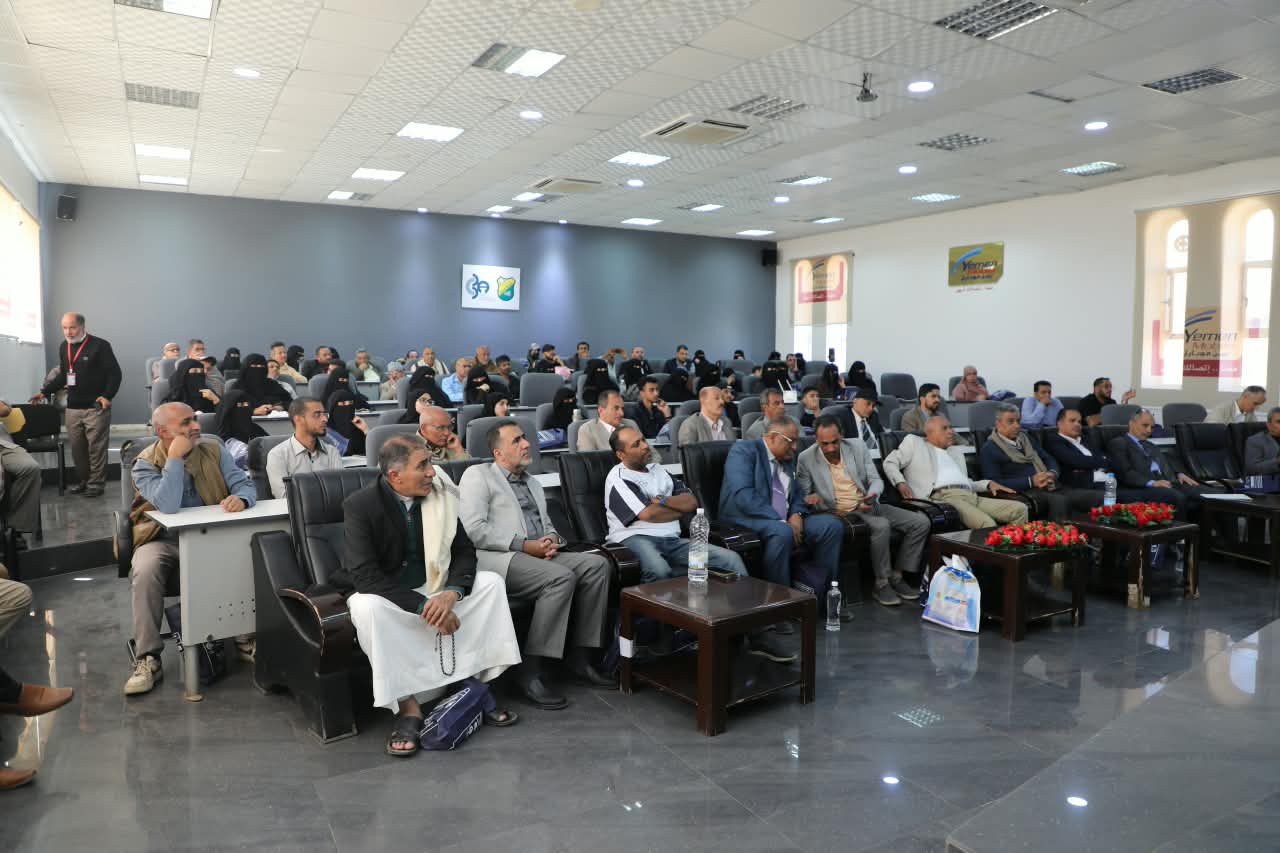
The dissertation defense was attended by a number of academics, researchers, and other interested participants, as well as the researcher’s colleagues and family members.