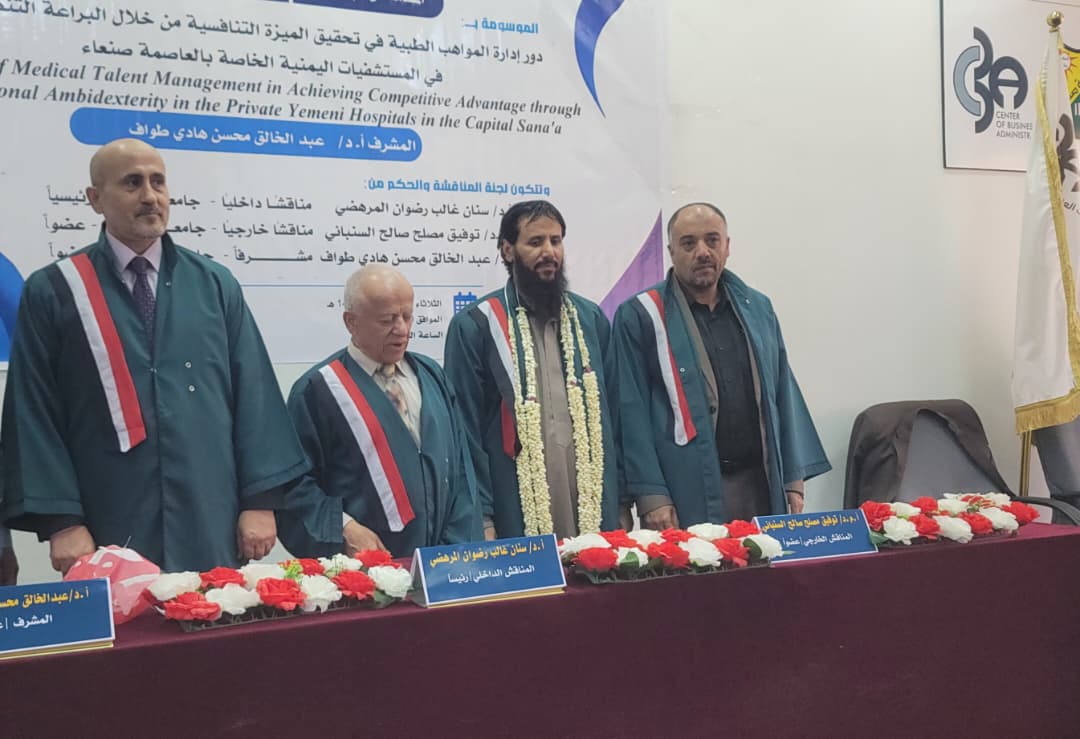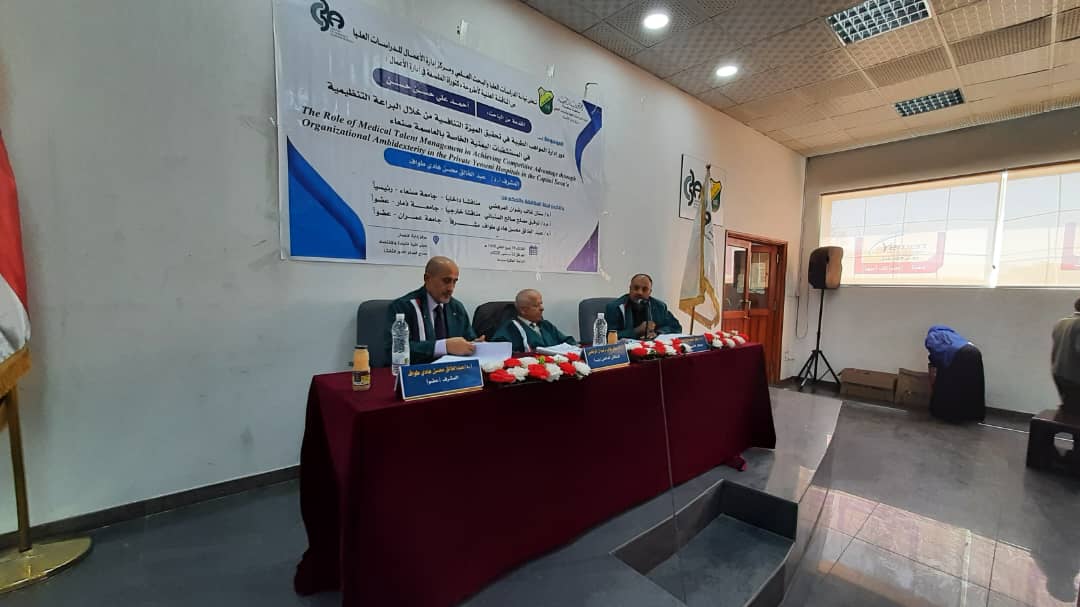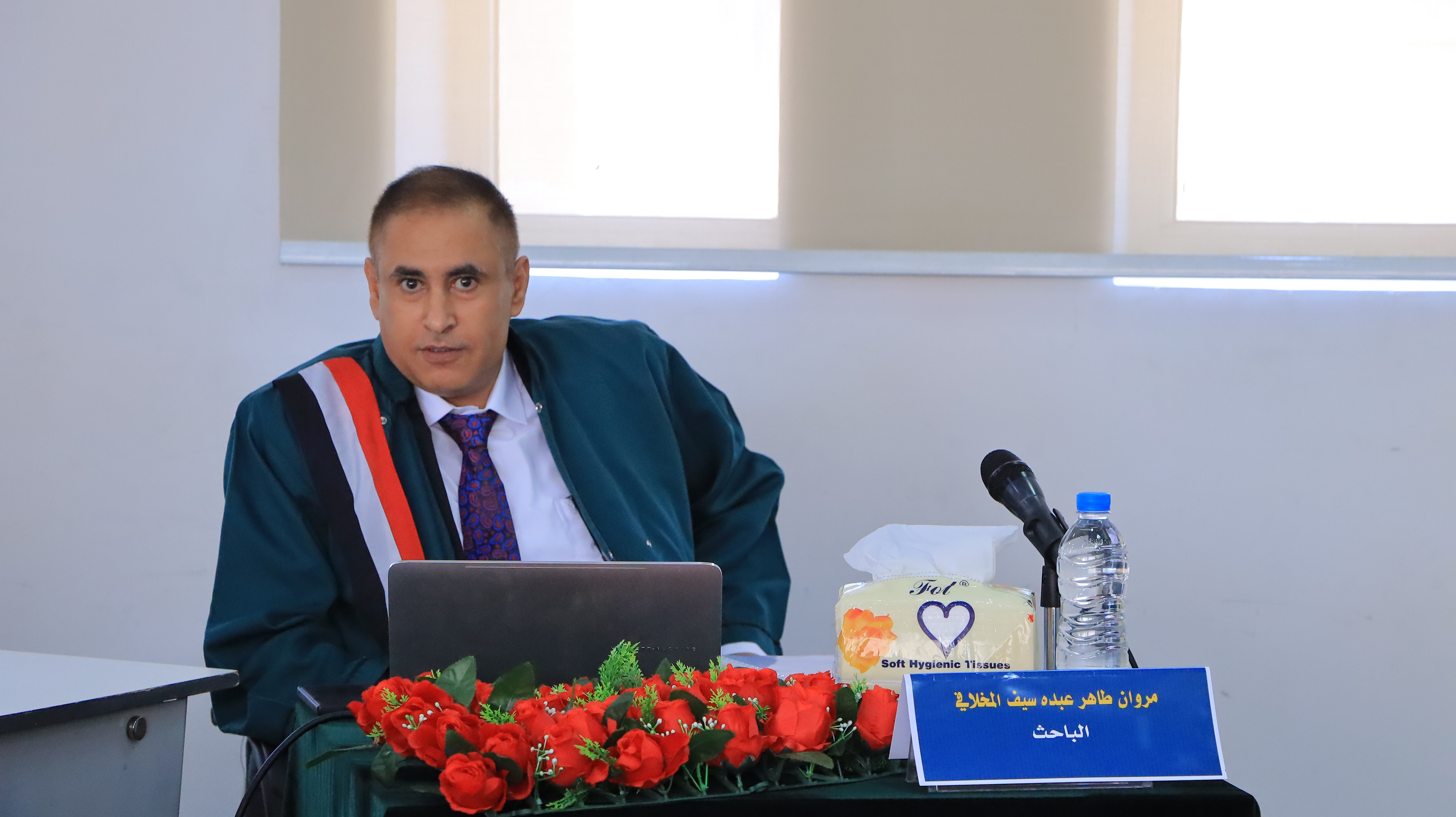

Researcher Ahmed Ali Hassan Hassan was awarded a PhD degree in Business Administration for his dissertation titled: The Role of Medical Talent Management in Achieving Competitive Advantage through Organizational Ambidexterity in Private Yemeni Hospitals in the Capital Sana’a, which was submitted to the Business Administration Center for Graduate Studies – Sana’a University. The dissertation defense was held on Tuesday, September 29, 2026.
The PhD Viva-Voce Committee consisted of the following:
- Prof. Dr. Sinan Ghalib Radwan Al-Marhadi – Sana’a University – Committee Chair and Internal Examiner
- Assoc. Prof. Dr. Tawfiq Musleh Saleh Al-Sanabani – Thamar University – External Examiner and Committee Member
- Prof. Dr. Abdul-Khaliq Mohsen Hadi Tawaf – Amran University – Supervisor and Committee Member.
The study aimed to determine the role of medical talent management in achieving competitive advantage through organizational ambidexterity in private Yemeni hospitals in the capital Sana’a. It also aimed to identify the levels of competitive advantage, medical talent management, and organizational ambidexterity.
To achieve these objectives, the study adopted a quantitative approach using descriptive-analytical methods and employed a comprehensive census of all employees representing general managers, department managers, and heads of sections in private Yemeni hospitals in the capital Sana’a that offer most medical specialties and were rated at Level "A" according to the 2021 assessment of the Ministry of Health and Population. The study population consisted of 270 individuals. A total of 257 questionnaires were retrieved, of which 236 questionnaires were analysed after excluding 21 questionnaires containing extreme values. The questionnaire was used as the primary data collection instrument, and the data were analysed using SPSS and AMOS.
The findings showed statistically significant direct roles of medical talent management in competitive advantage, medical talent management in organizational ambidexterity, and organizational ambidexterity in competitive advantage. The results also demonstrated a statistically significant indirect role of medical talent management in achieving competitive advantage through organizational ambidexterity in private Yemeni hospitals in the capital Sana’a. In addition, the findings indicated that the levels of competitive advantage, medical talent management, and organizational ambidexterity were high.
The study presented a number of recommendations, most notably the need to strengthen competitive advantage in private Yemeni hospitals in the capital Sana’a, with particular attention to bridging the gap between strategy and implementation and moving from good performance towards sustainable excellence.
The study also recommended developing medical talent management strategies to formulate comprehensive policies and initiatives for attracting professionals with rare and complex specialisations, supporting the development and retention of medical talent, and continuously evaluating such talent to minimise deviations and leverage medical talent for excellence and competitiveness.
Furthermore, the study recommended strengthening organizational ambidexterity strategies in private hospitals by activating dynamic capabilities that enable them to strategically exploit existing resources and systematically explore future opportunities, thereby supporting competitive sustainability in a volatile healthcare environment.
The dissertation defense was attended by a number of academics, researchers, and interested participants, as well as the researcher’s colleagues and family members.