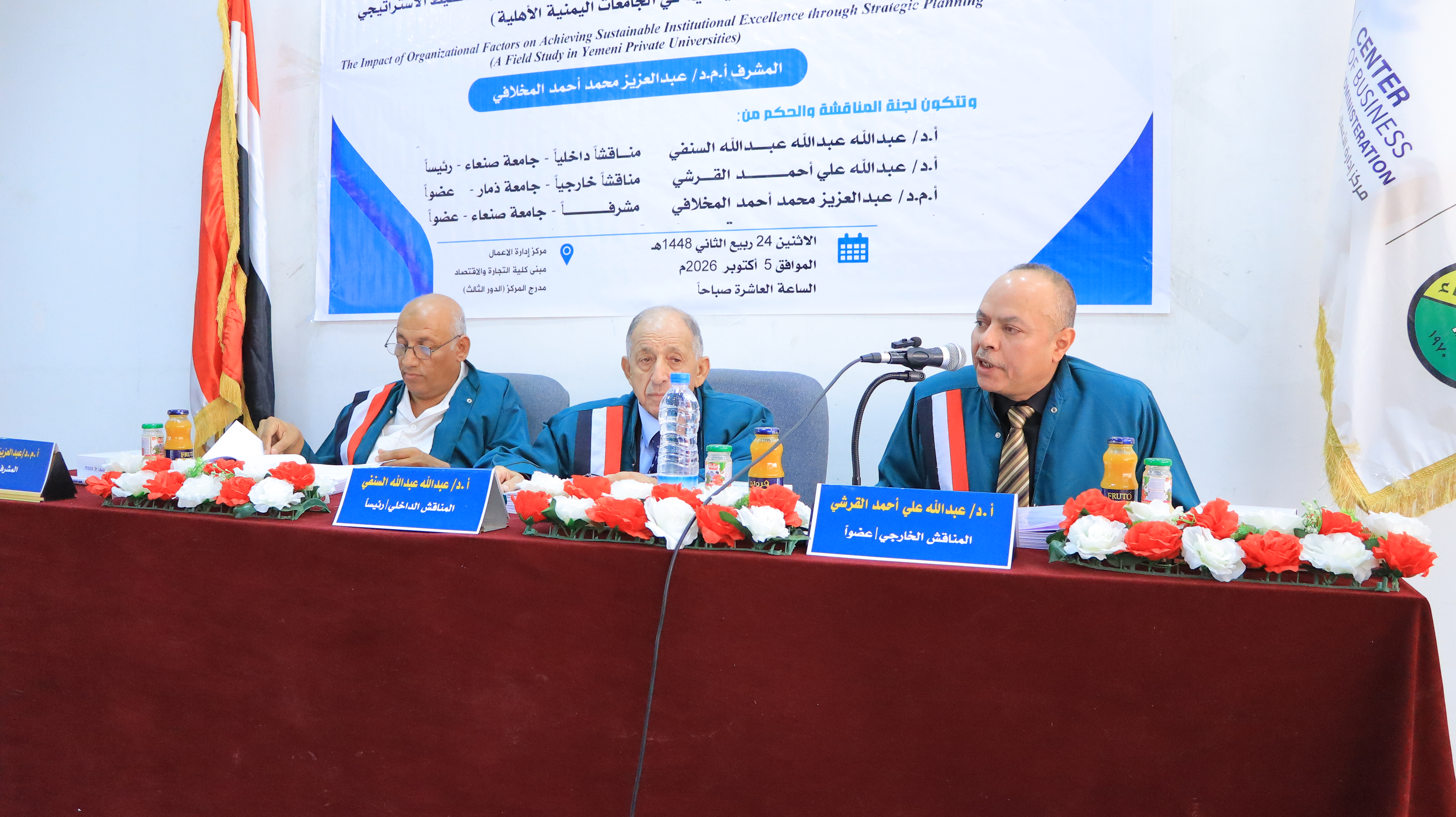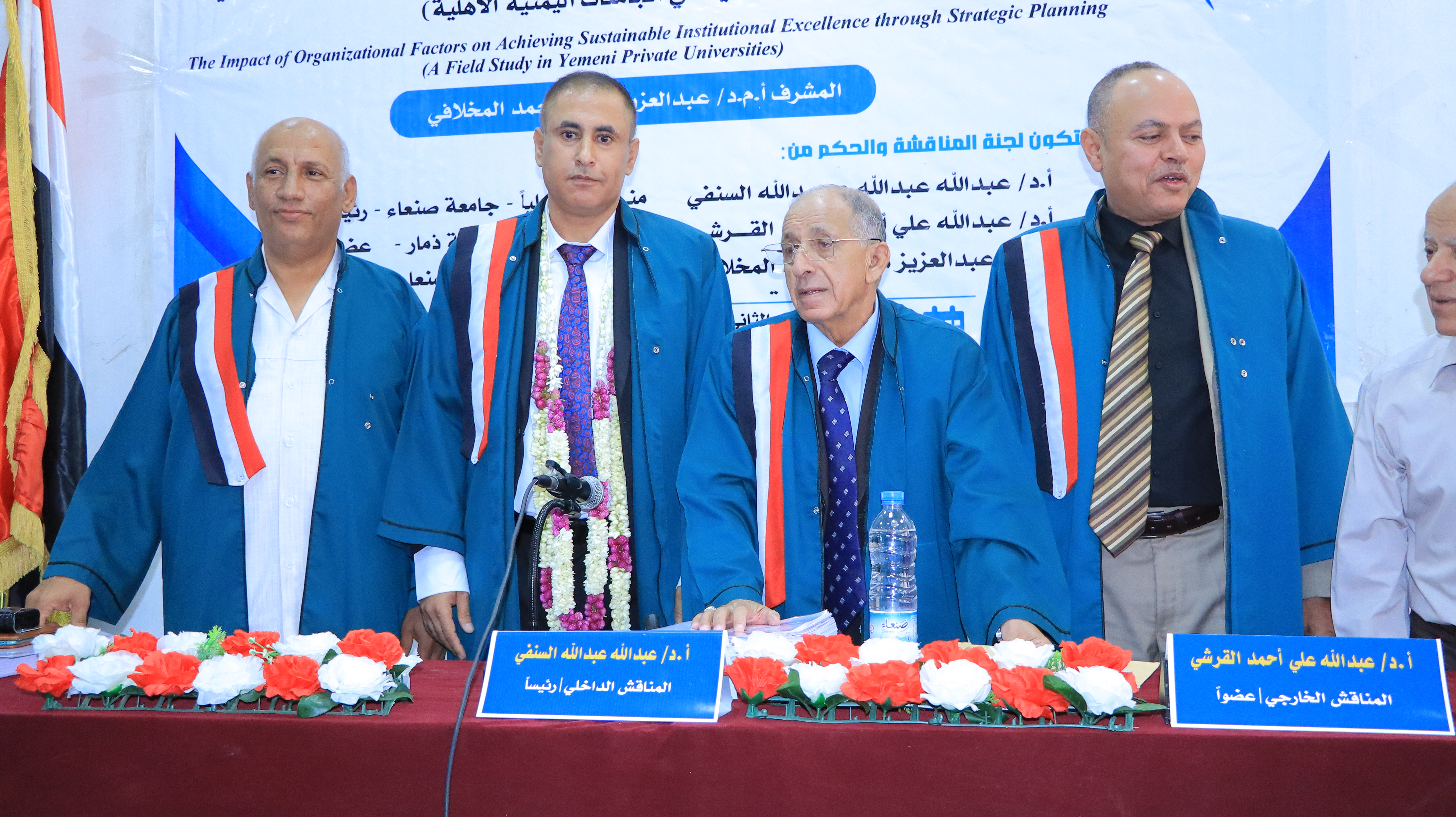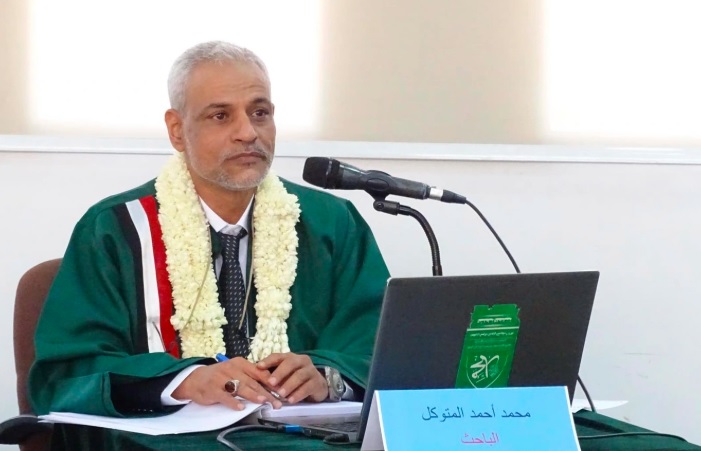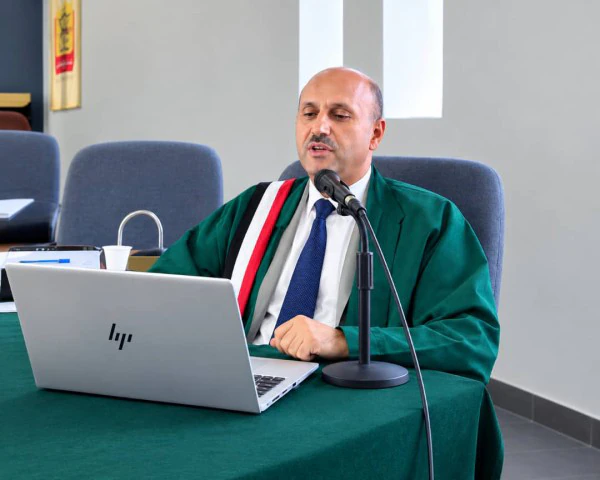
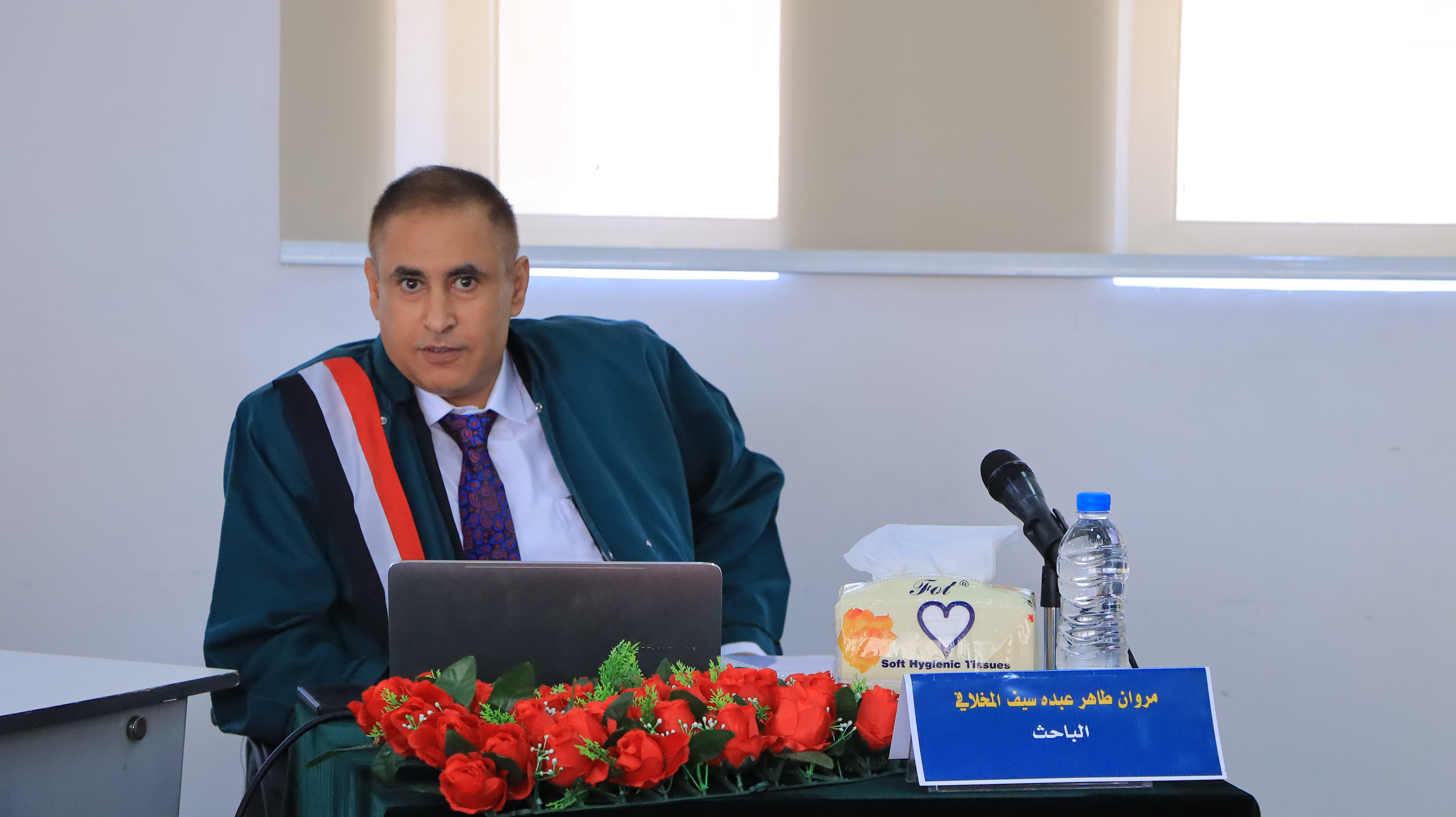
Researcher Marwan Taher Abdo Saif Al-Mekhlafi was awarded a PhD degree in Business Administration for his dissertation titled: The Impact of Organizational Factors on Achieving Sustainable Institutional Excellence through Strategic Planning: A Field Study in Yemeni Private Universities, which was submitted to the Business Administration Center for Graduate Studies – Sana’a University. The dissertation defense was held on Monday, October 5, 2026.
The PhD Viva-Voce Committee consisted of the following:
Prof. Dr. Abdullah Abdullah Al-Sanfi – Sana’a University – Internal Examiner and Committee Chair
Prof. Dr. Abdullah Ali Ahmed Al-Qurashi – Thamar University – External Examiner
Assoc. Prof. Dr. Abdulaziz Mohammed Ahmed Al-Mekhlafi – Sana’a University – Supervisor and Committee Member.
The study aimed to investigate the impact of organizational factors, represented by administrative leadership, organizational culture, and human resources, on achieving sustainable institutional excellence, represented by excellence in service delivery, overall performance results, and sustainability, through strategic planning as a mediating variable, comprising environmental analysis, strategy formulation, strategy implementation, and monitoring and evaluation, in Yemeni private universities.
To achieve this objective, the study adopted a quantitative approach using a descriptive-analytical design and employed a questionnaire as the primary instrument for data collection. The study population consisted of 660 academic and administrative personnel and administrative leaders across ten private universities, selected from a total of 18 private universities. A systematic random sample of 321 respondents was selected from the study population. For data analysis and hypothesis testing, the study employed the Statistical Package for the Social Sciences (SPSS 27) and Structural Equation Modeling (SEM) using AMOS 25 to examine the direct and indirect relationships among the study variables.
The findings showed that the levels of organizational factors, strategic planning practices, and sustainable institutional excellence were high in the private Yemeni universities under study, indicating the presence of a supportive organizational environment, a clear emphasis on strategic practices, and an ability to achieve outstanding and sustainable performance outcomes.
The results also demonstrated a statistically significant positive effect of organizational factors on sustainable institutional excellence, with an effect coefficient of 90.4%, as well as a statistically significant positive effect of organizational factors on strategic planning practices, with an effect coefficient of 89.3%. Furthermore, the findings revealed a statistically significant effect of organizational factors on sustainable institutional excellence through strategic planning as a mediating variable, with partial mediation identified across most dimensions. This confirms that organizational factors contribute to sustainable institutional excellence through both direct and indirect effects.
The findings further indicated that there were no statistically significant differences in respondents’ perceptions of strategic planning and sustainable institutional excellence attributable to gender, age, nature of work, years of experience, university size, or university age. No statistically significant differences were also found in strategic planning based on educational qualification. However, statistically significant differences were found in both organizational factors and sustainable institutional excellence in favor of respondents holding doctoral degrees compared with those holding master’s degrees.
The study presented a number of recommendations, most notably the need to continuously strengthen the effectiveness of organizational factors, particularly administrative leadership, organizational culture, and human resources, and to conduct further research into other factors that may contribute to improving strategic planning practices, including environmental analysis, strategy formulation, implementation, and monitoring and evaluation. Such efforts would contribute to achieving sustainable institutional excellence in private Yemeni universities, enhancing the added value of their core functions of education, scientific research, and community service, and ensuring their long-term continuity.
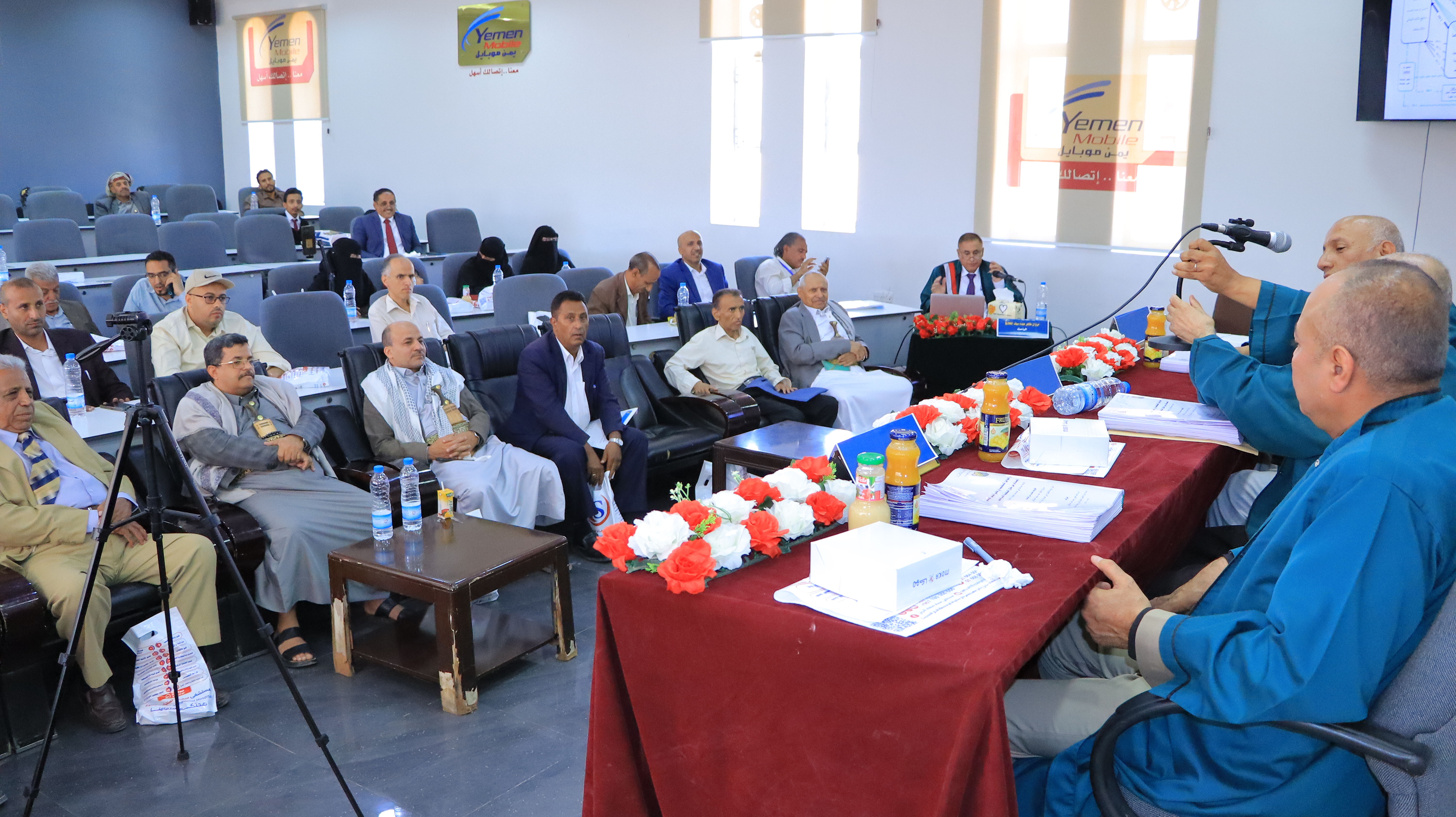
The dissertation defense was attended by a number of academics, researchers, and interested participants, as well as the researcher’s colleagues and family members.