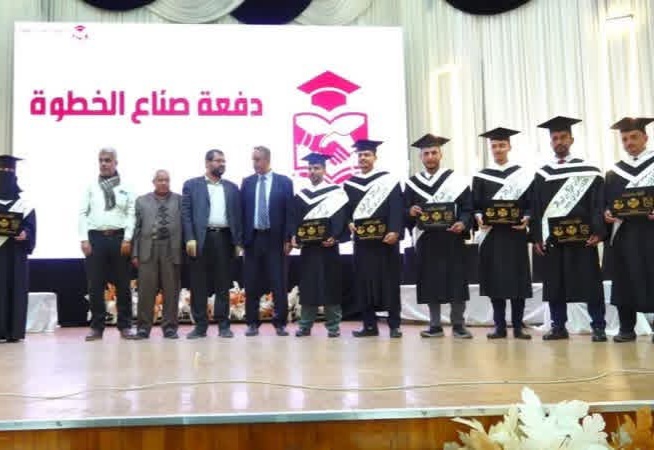
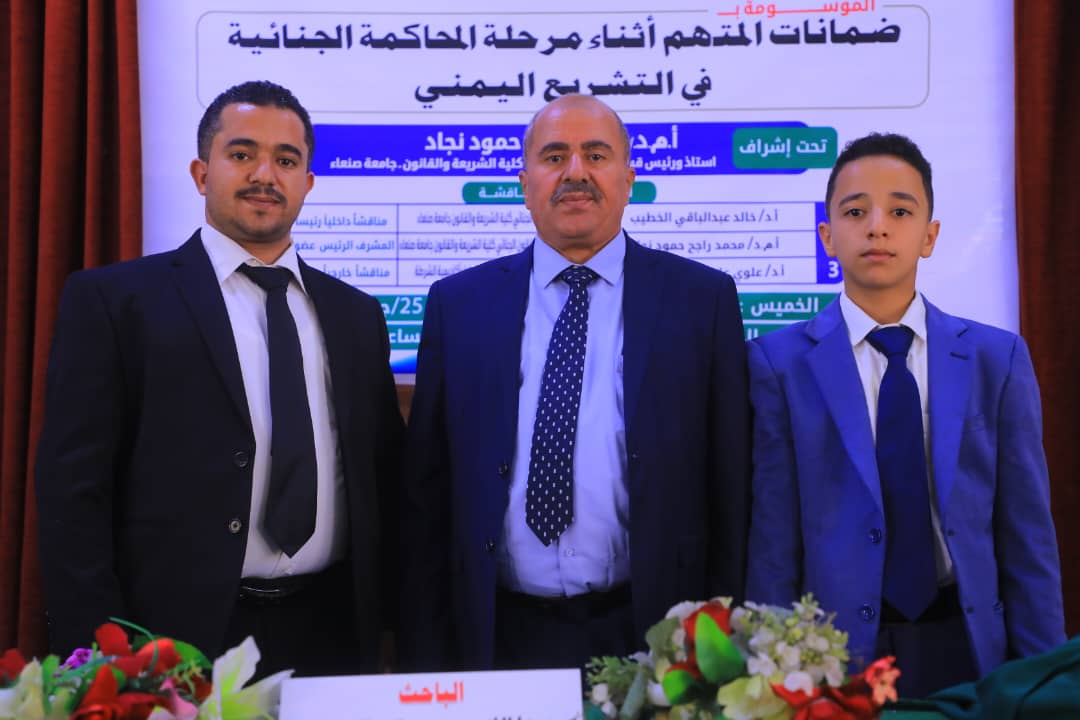
Researcher Abdulmalik Mohsen Ali Al-Samad was awarded a PhD degree in Public Law for his dissertation titled: Safeguards for the Accused during the Criminal Trial Stage under Yemeni Legislation, which was submitted to the Department of Public Law, Faculty of Sharia and Law–Sana’a University. The dissertation defense was held on Thursday, November 5, 2026.
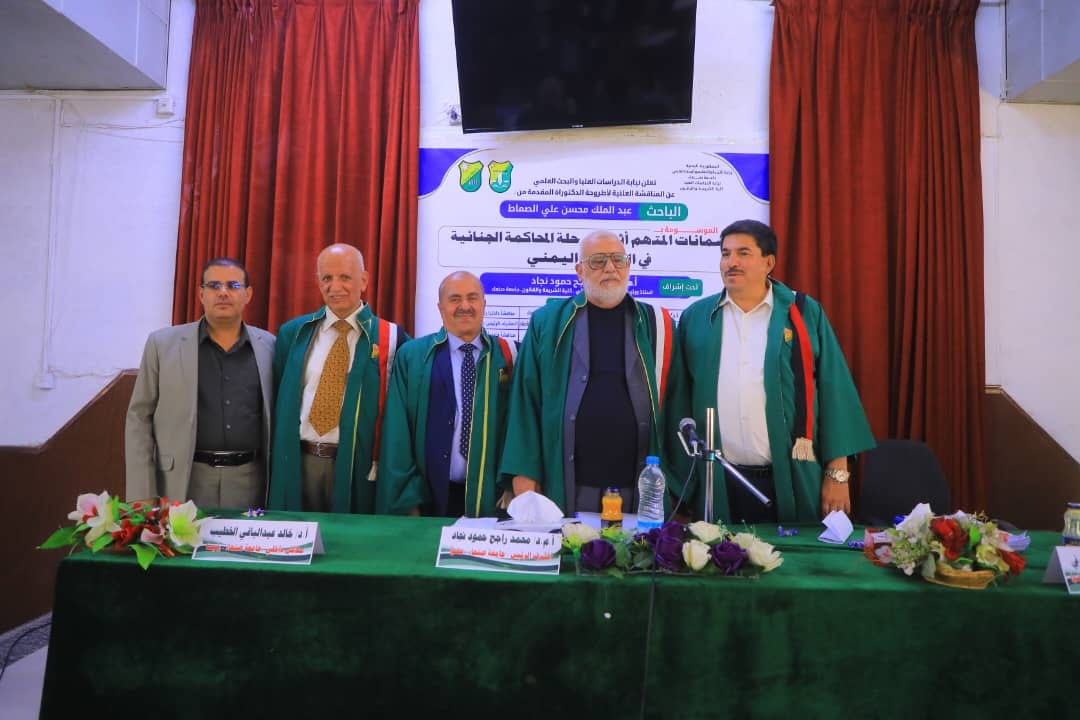
The PhD Viva-Voce Committee, which was formed based on a resolution issued by the Graduate Studies and Scientific Research Council, consisted of the following:
• Prof. Khaled Abdulbaqi Al-Khatib – Internal Examiner and Chair.
• Prof. Mohammed Rajeh Hammoud Najad – Supervisor and Committee Member.
• Prof. Alawi Ali Ahmed Al-Sharefi – External Examiner and Committee Member.
The dissertation aimed to examine the safeguards that must be afforded to the accused during and after criminal trials, and to identify the protections necessary to ensure that the accused can adequately defend themselves and respond to the charges brought against them. It also examined the Yemeni legislator’s approach to these safeguards, their legal foundations, and shortcomings in relevant legislation.
The dissertation further addressed the avenues of appeal available to the accused during trial and after judgment, as well as criminal procedures and the legal consequences arising from violations of the safeguards established for a fair trial.
The study yielded several key findings. It critically ensured that the accused receives a fair trial before an independent and impartial court in accordance with the law. It also emphasized the need to enable the accused to defend themselves, either personally or through legal counsel, and to provide them with the opportunity to present evidence and arguments that may establish their innocence or refute the charges against them.
The study affirmed that the legal safeguards afforded to the accused constitute fundamental rights that courts must uphold. Violations of these safeguards may have legal consequences affecting the validity of proceedings and judgments, depending on the nature of the violation and the applicable legal provisions. It also underscored the State’s responsibility to provide the necessary legal safeguards when exercising its authority to impose penalties, thereby strengthening public confidence in criminal justice.
The findings also highlighted the importance of developing criminal justice legislation, providing judges with continuous professional development, and enabling the accused to exercise their rights to defense and appeal against judgments. They further emphasized the accused’s right to seek legal rehabilitation in accordance with the applicable statutory requirements and procedures.
In light of these findings, the dissertation recommended enhancing judges’ academic and professional qualifications and establishing competency and experience standards that address contemporary challenges and modern methods of committing crimes, alongside continuously improving the judicial working environment. It also called for updating Yemeni legislation, establishing a clear legal definition of the accused, and reviewing certain provisions of the Crimes and Penalties Law to ensure greater consistency in legal terminology.
Other recommendations included strengthening oversight of court proceedings, ensuring legal protection for the accused throughout all stages of trial, and upholding the presumption of innocence, the dignity of the accused, and their human rights. The study also emphasized the importance of enabling the accused to attend hearings, submit observations and evidence, and exercise their rights to defense and appeal in accordance with the law. Furthermore, it recommended ensuring that individuals proven innocent have the right to claim compensation for damages incurred and to seek legal rehabilitation after serving their sentences, subject to the applicable legal provisions and procedures.
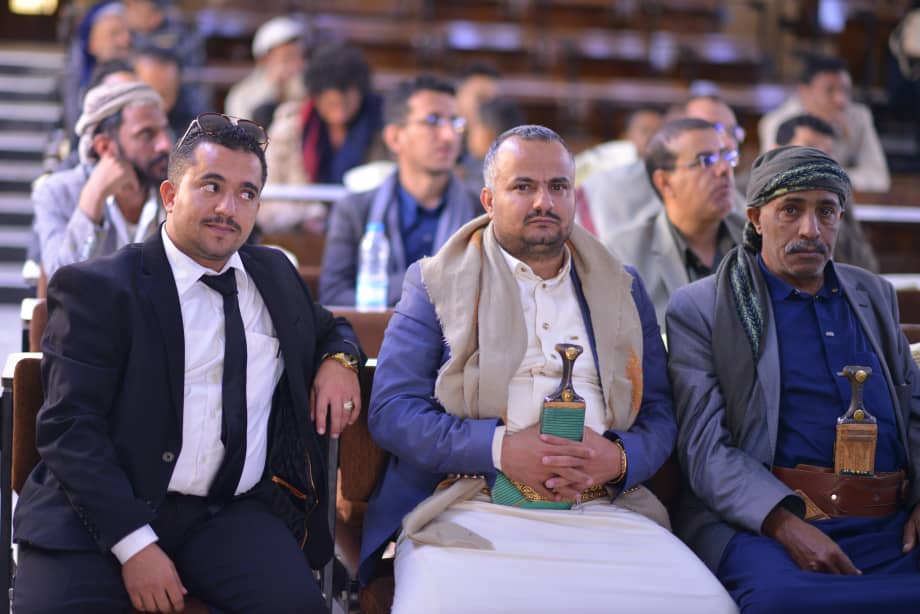
The dissertation defense was attended by a number of academics, postgraduate students, researchers, as well as the researcher's colleagues and family members.
.
https://youtube.com/shorts/8IquHd4bE08?si=9yDtXqft9m70YBKe