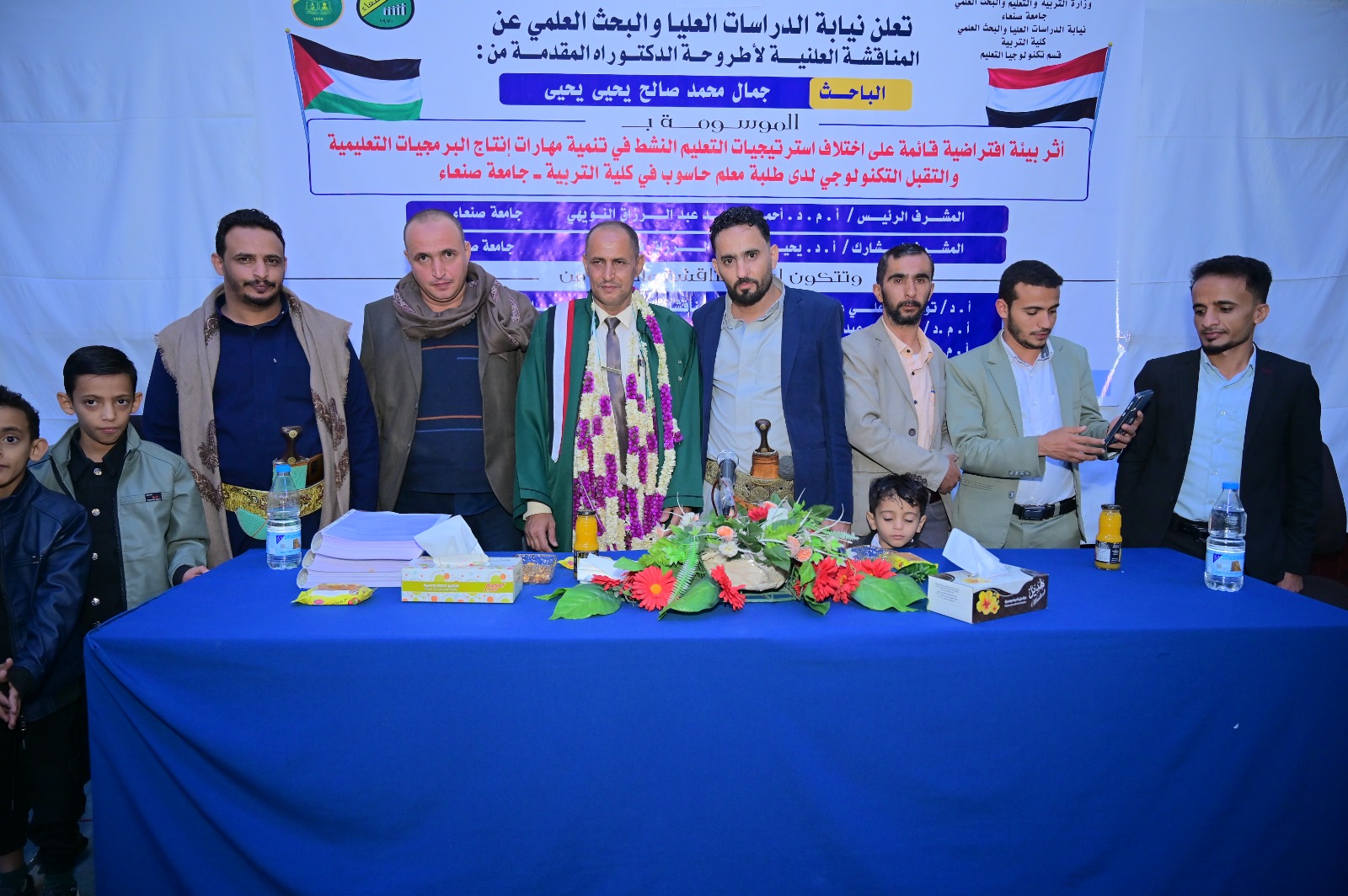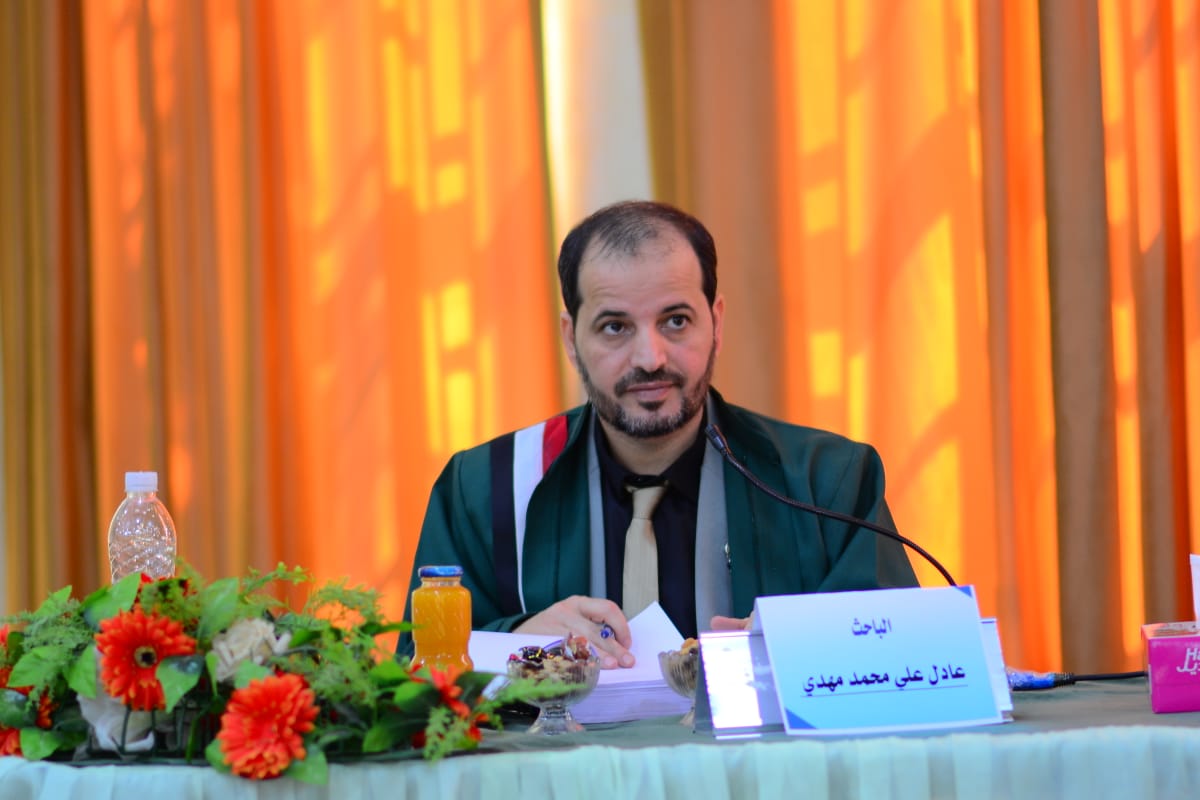
Researcher Jamal Mohammed Saleh Yahya Yahya was awarded a PhD degree in Educational Technology for his dissertation titled: The Impact of a Virtual Learning Environment Based on Different Active Learning Strategies on Educational Software Production Skills and Technology Acceptance among Computer Teacher Education Students at the Faculty of Education, Sana’a University, which was submitted to the Department of Educational Technology, Faculty of Education–Sana’a University. The dissertation defense was held on Thursday, November 5, 2026.
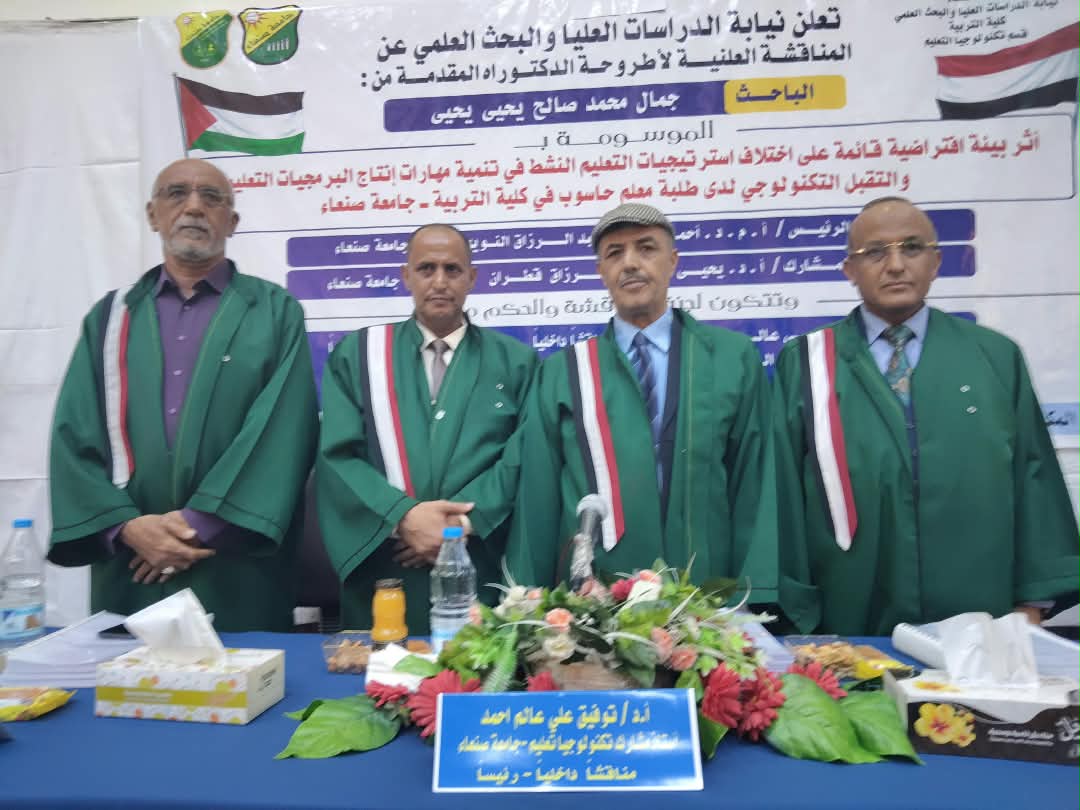
The PhD Viva-Voce Committee, which was formed based on a resolution issued by the Graduate Studies and Scientific Research Council, consisted of the following:
• Prof. Tawfiq Ali Alim Ahmed – Internal Examiner and Chair, Sana’a University.
• Assoc. Prof. Ahmed Mohammed Abdulrazzaq Al-Nuwaihi – Main Supervisor and Committee Member, Sana’a University.
• Assoc. Prof. Ezzeddin Hasan Muad – External Examiner and Committee Member, Hodeidah University.
The dissertation aimed to investigate the impact of a virtual learning environment incorporating different active learning strategies—namely, sequential and synergistic collaboration, and individual and group projects—on developing students’ cognitive achievement and practical skills in educational software production, as well as their level of technology acceptance. The study focused on Computer Teacher education students at the Faculty of Education, Sana’a University.
The dissertation findings revealed statistically significant differences at the 0.05 level between pre- and post-test measurements among all four experimental groups in the achievement test, observation checklist, and technology acceptance scale, with results favoring the post-test measurements.
The findings also showed that students in the second experimental group, which used the synergistic collaboration model, outperformed those in the first group, which used the sequential collaboration model, with statistically significant differences in both cognitive achievement and practical skills. Similarly, students in the fourth experimental group, which used the group project model, outperformed those in the third group, which used the individual project model, with statistically significant differences in cognitive achievement, practical skills, and technology acceptance.
The results further confirmed the effectiveness of the virtual learning environment across all four models, with gain ratios exceeding Black’s normalized gain criterion of 1.2 across all dependent variables.
In light of these findings, the dissertation recommended adopting Google Classroom as a virtual learning platform for practical courses and strategically incorporating synergistic collaboration and group projects into skills-based instruction, given their demonstrated effectiveness in developing educational software production skills.
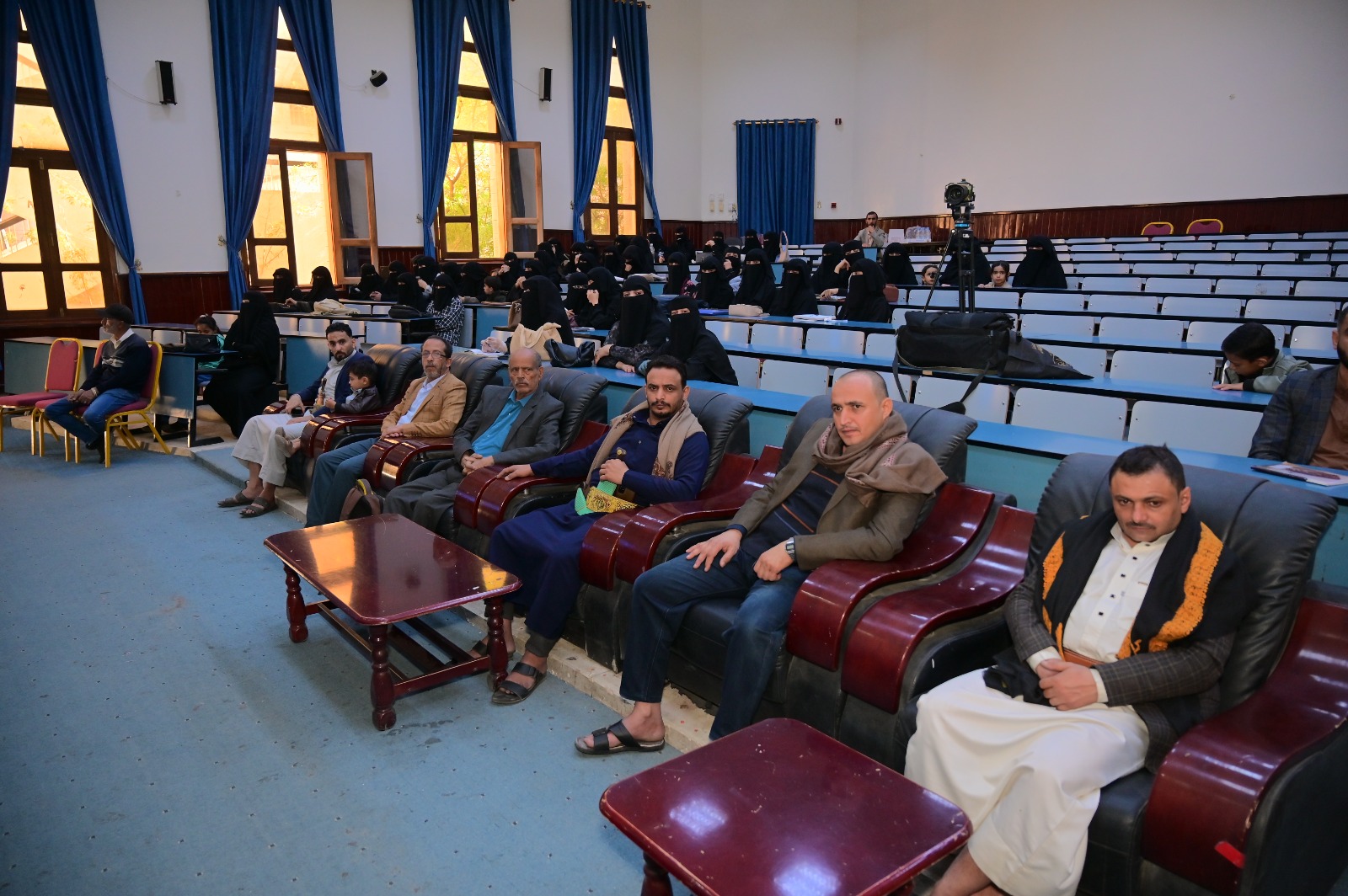
The dissertation defense was attended by a number of academics, postgraduate students, researchers, as well as the researcher's colleagues and family members.