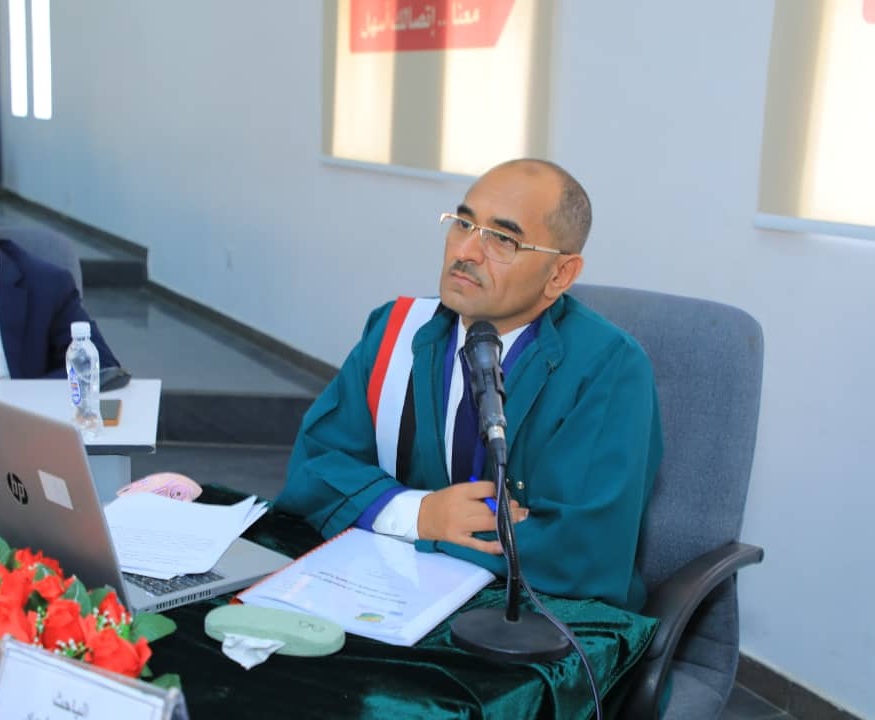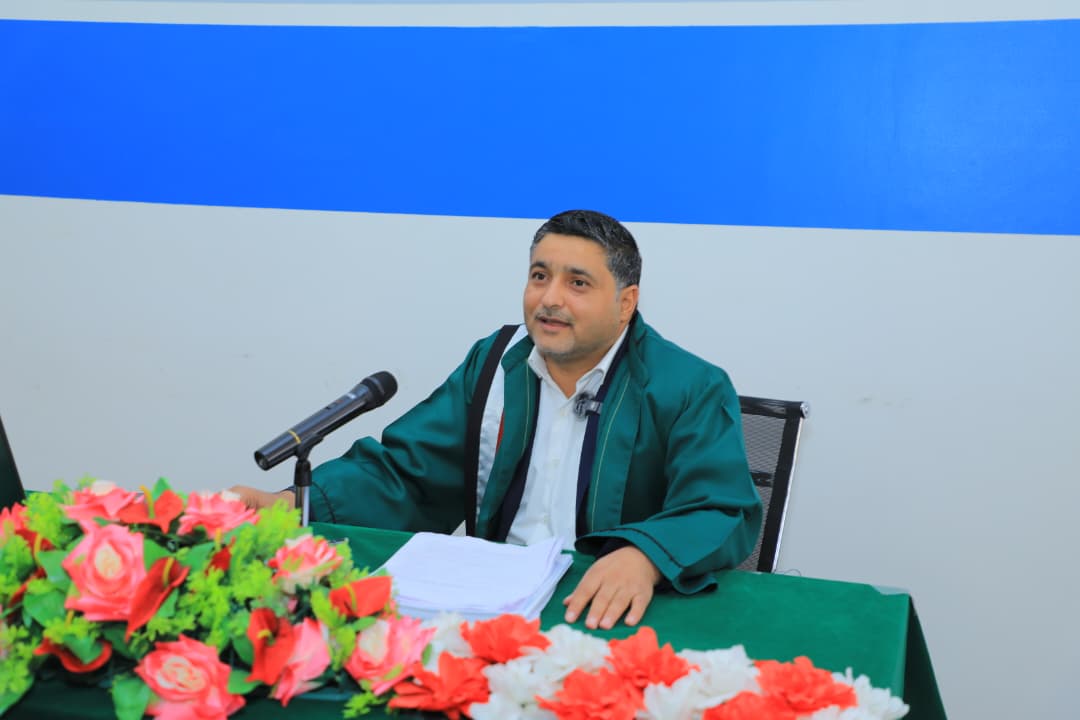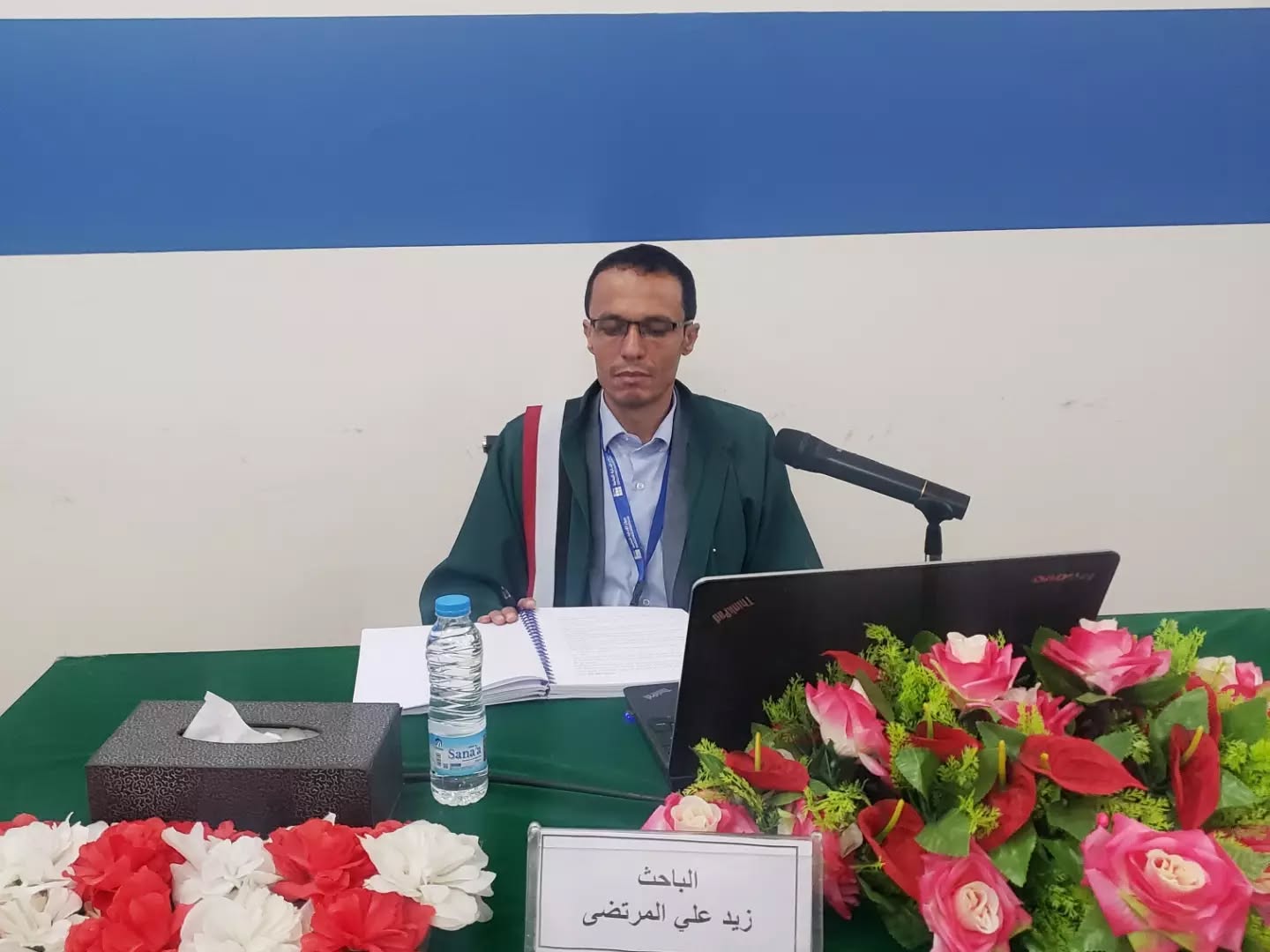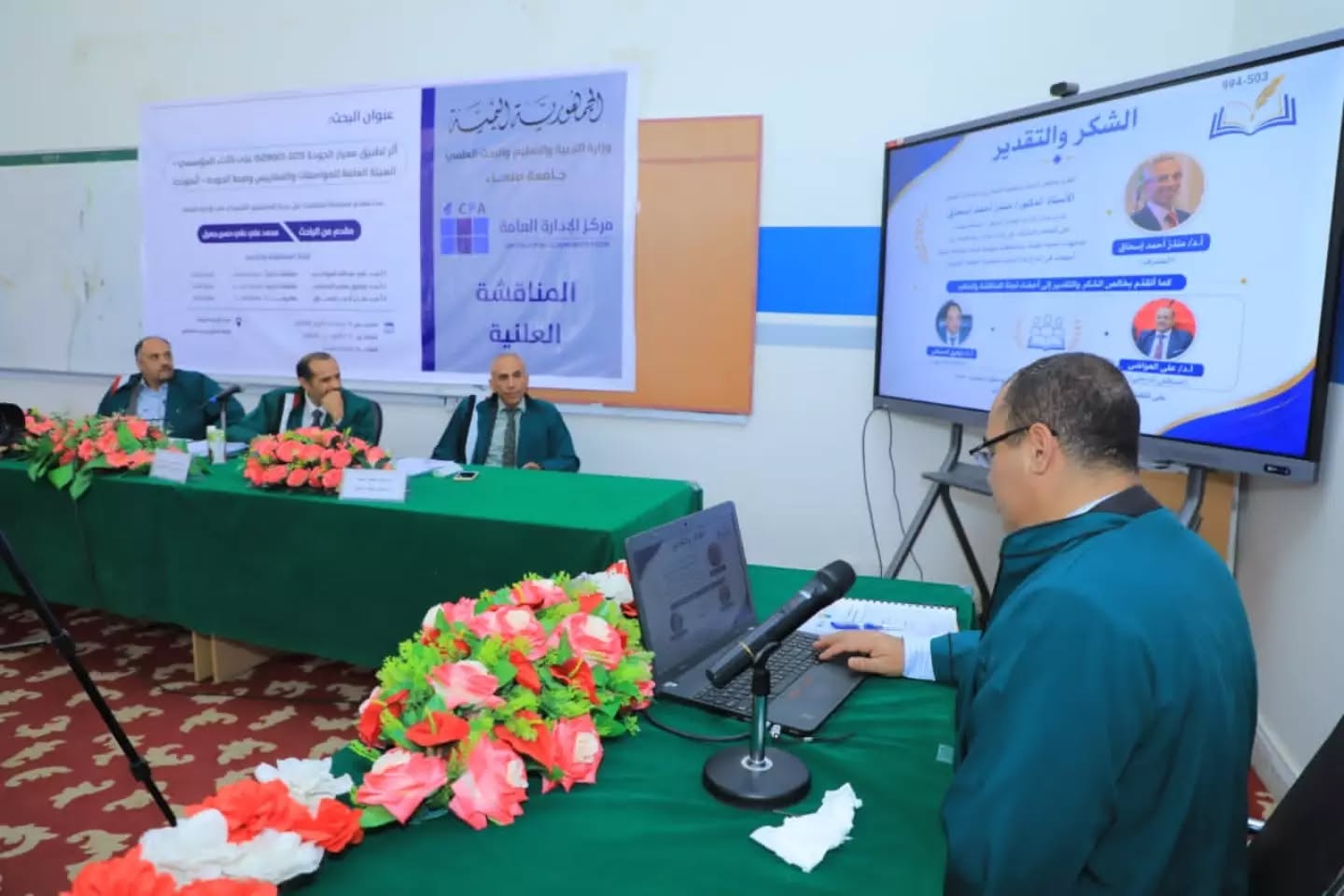
Researcher Mohammed Hussein Ali Al-Thari was awarded an Executive Master’s Degree in Public Administration for his thesis titled: A Proposed Framework for Managing the Recovery and Reconstruction Phase in Yemen in Light of Contemporary International Practices, which was submitted to the Center for Public Administration, Sana’a University– Sana’a University. The MA defense was held on Thursday, October 29, 2026 .
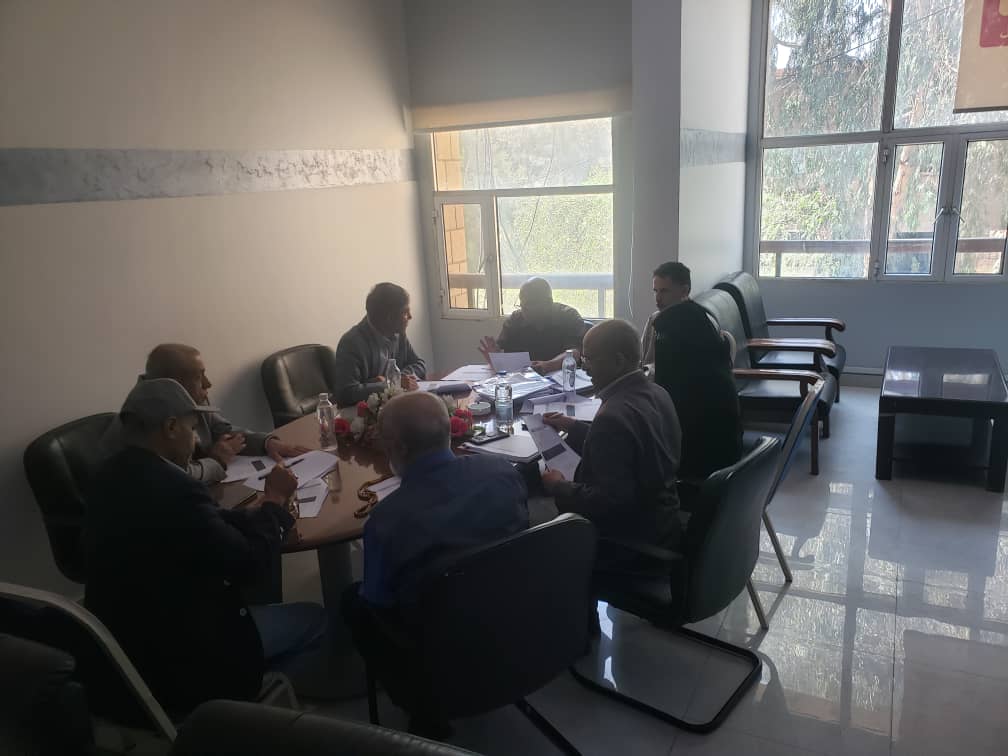
The MA Viva-voce Committee, which was formed based on a resolution issued by the Graduate Studies and Scientific Research Council, consisted of the following:
·Assoc. Prof. Fouad Hassan Heba – External Examiner and Chair.
·Dr. Khaled Al-Qaidani – Internal Examiner and Committee Member.
·Assoc. Prof. Munther Ishaq – Supervisor and Committee Member.
The study aimed to introduce international methodologies for disaster management, recovery, and reconstruction, and examine their relationship with disaster risk reduction concepts. It also sought to study the experiences of successive Yemeni governments in managing natural disasters and wars and compare them with international practices in order to analyze these experiences and identify their shortcomings. Ultimately, the research aimed to present a proposed framework for disaster management, recovery, and reconstruction in Yemen in accordance with good international practices.
The research reached several findings, most notably the inadequacy of the legislative framework in adopting a comprehensive preventive vision and the absence of an overarching national law on risk management. It also identified reliance on temporary entities, such as funds and committees, resulting in the loss of institutional memory once their mandates end. Furthermore, the research highlighted weak coordination mechanisms, the proliferation of committees and overlapping mandates, reliance on fluctuating government funding or emergency financing, the absence of a unified national methodology for risk assessment and mapping, and limited engagement of local communities and national experts and professionals.
The research recommended reforming and modernizing the legislative and legal framework through the enactment of a comprehensive national law on disaster management and disaster risk reduction, and the establishment of a supreme national authority for recovery and risk management. It also called for developing effective partnerships with international donor and funding agencies while safeguarding national sovereignty. Other recommendations included developing a clear strategy for dialogue between the public and private sectors, mitigating the political and legal risks facing investors during the post-conflict phase, and establishing a proposed organizational structure for the national authority.
The thesis defense was attended by faculty members, researchers, students, and interested participants as well as the researcher's colleagues and family members.