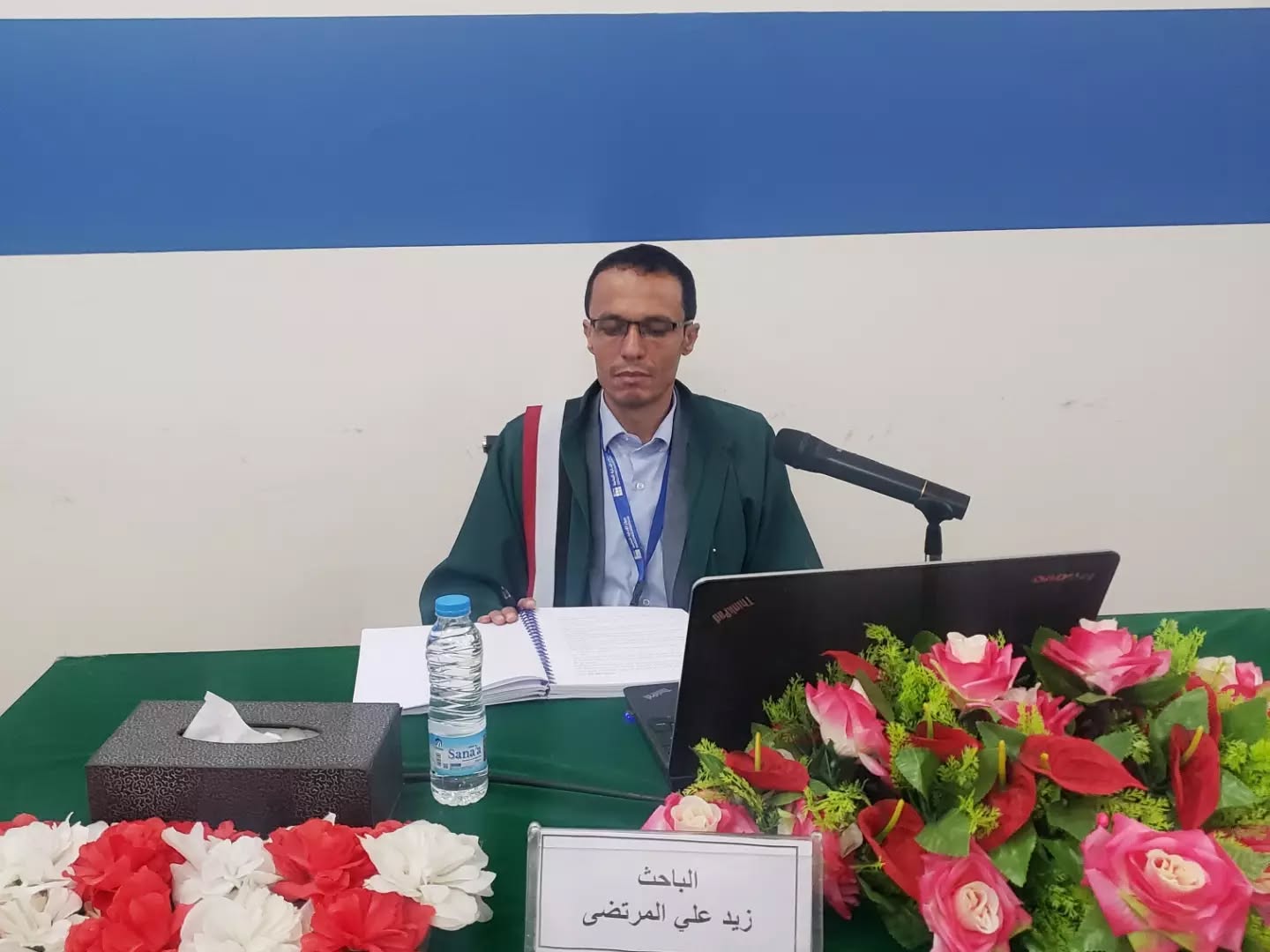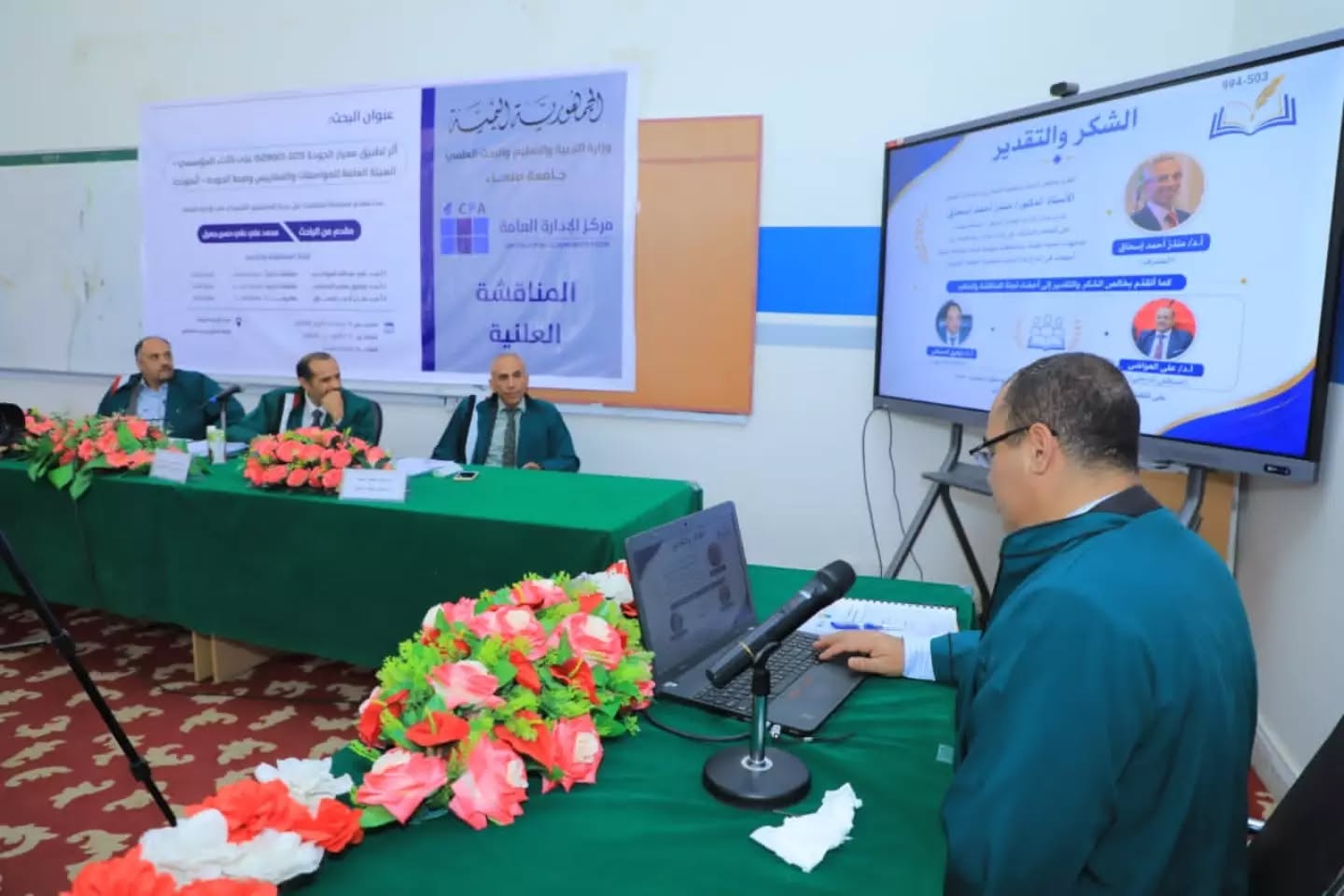
Researcher Bassam Ali Mohammed Najad was awarded an Executive Master’s Degree in Public Administration for his thesis titled: The Role of E-Management in Service Quality at the Yemeni Immigration, Passport, and Naturalization Authority, which was submitted to the Center for Public Administration– Sana’a University. The MA defense was held on Sunday, October 25, 2026.
The MA Viva-voce Committee, which was formed based on a resolution issued by the Graduate Studies and Scientific Research Council, consisted of the following:
·Prof. Amaal Mohammed Al-Mujahid – External Examiner and Chair.
·Dr. Ahmed Mohammed Abdullah Nasser – Internal Examiner and Committee Member.
·Dr. Mohammed Ahmed Hussein Al-Sharafi – Supervisor and Committee Member.
The study aimed to assess the extent to which the requirements for implementing e-management are available at the Yemeni Immigration, Passport, and Naturalization Authority; examine the quality of services provided by the Authority based on established quality dimensions; measure the impact of e-management and its requirements on improving service quality; and identify differences in respondents’ perceptions of e-management and service quality at the Authority.
The study yielded several key findings. It found a strong, positive, and statistically significant effect of e-management on service quality. Security requirements had the greatest impact on service quality, followed by technological, human, administrative, and financial requirements.
The findings also revealed no significant differences in employees’ perceptions of the level of e-management implementation or service quality attributable to demographic variables, indicating broad agreement among respondents regarding the Authority’s digital transformation. Furthermore, the Authority was found to have achieved a relatively advanced level of e-management implementation. The availability of technological, administrative, and security requirements was rated high, whereas the availability of human and financial requirements was rated moderate.
In light of these findings, the researcher made several recommendations, including adopting a comprehensive digital transformation strategy and expanding the implementation of e-management applications; updating systems and regulations to align with digital transformation requirements; developing technological infrastructure, databases, and communication networks; and strengthening information security and protecting beneficiaries’ data. The study also recommended enhancing trust in and security of electronic services, improving complaint-handling and beneficiary communication systems, increasing service reliability, and reducing operational errors.
The thesis defense was attended by faculty members, researchers, students, and interested participants as well as the researcher's colleagues and family members.