*Sana’a – Faculty of Agriculture, Food and Environment Media*
*Saturday, October 17, 2026*
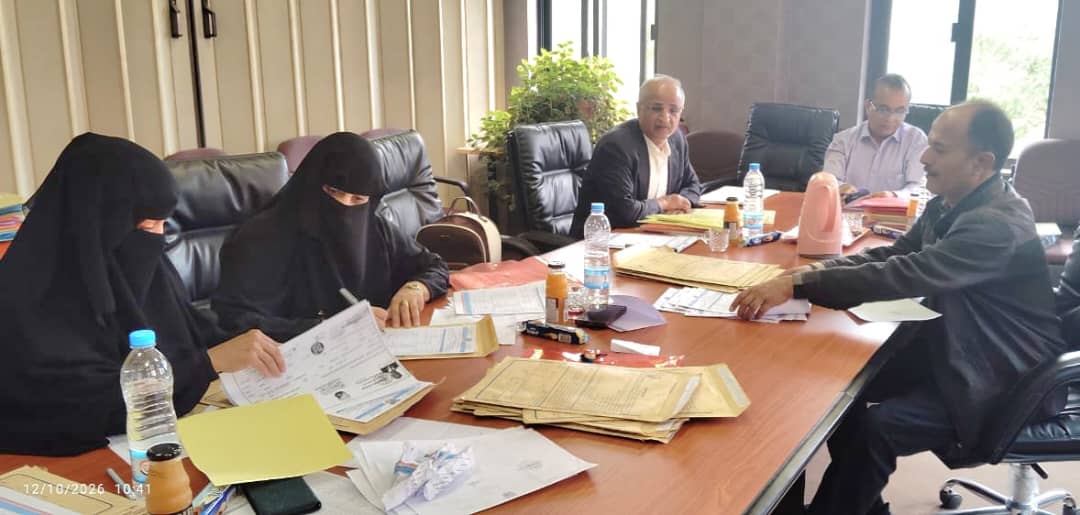
The Council of the Faculty of Agriculture, Food and Environment at Sana’a University held its fifth regular meeting today for the 2026–2027 academic year, chaired by the Faculty Dean, Prof. Hesham Al-Jabali, and attended by the vice deans and heads of scientific departments. The meeting was dedicated to discussing various topics related to academic affairs, research, and graduate programs, and making decisions aimed at enhancing scientific performance and advancing the faculty's educational and research journey.
The council began its proceedings by approving the minutes of its previous meeting No. 4, held on September 15, 2026. It also discussed a number of organizational and administrative matters concerning workflow within the faculty and its research centers, taking appropriate decisions regarding them.
In the field of academic affairs, the council approved the completion of several academic and administrative procedures to support the development of the academic staff and enhance institutional performance. It also approved the admission of new cohorts into master’s degree programs for the 2026–2027 academic year across several specializations, and endorsed course results for master's students in the Departments of Agricultural Economics and Animal Wealth.
Regarding scientific research and graduate studies, the council approved the registration of new master's theses, adopted their scientific titles, and formed supervision committees in various fields. This comes as part of the faculty’s strategic direction toward strengthening applied scientific research, developing graduate programs, and linking their outcomes to agricultural development needs and plant production enhancement requirements.
The council concluded its meeting by emphasizing the prompt finalization of official procedures for the approved decisions, and the continuation of efforts to develop the educational and research processes as well as graduate programs. These steps aim to elevate the quality of academic outputs, serve the agricultural sector, and achieve sustainable development in Yemen.
Faculty of Agriculture, Food and Environment Council at Sana’a University Holds Its Fifth Regular Meeting and Approves a Package of Academic and Research Decisions
105 views
316 words
2 min read