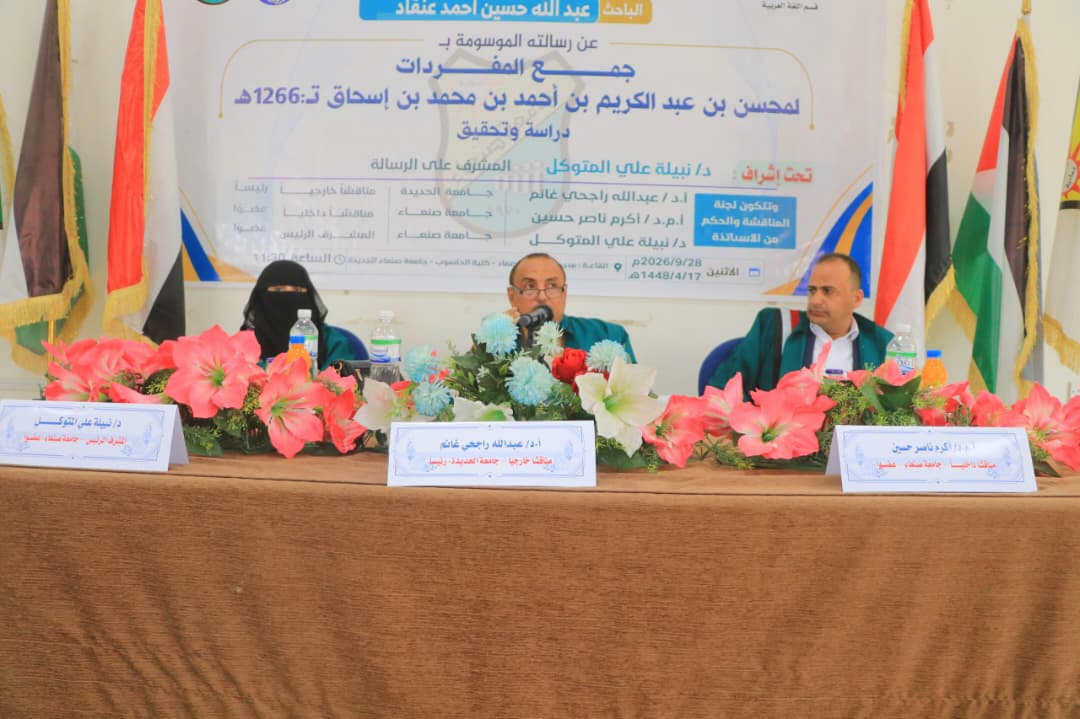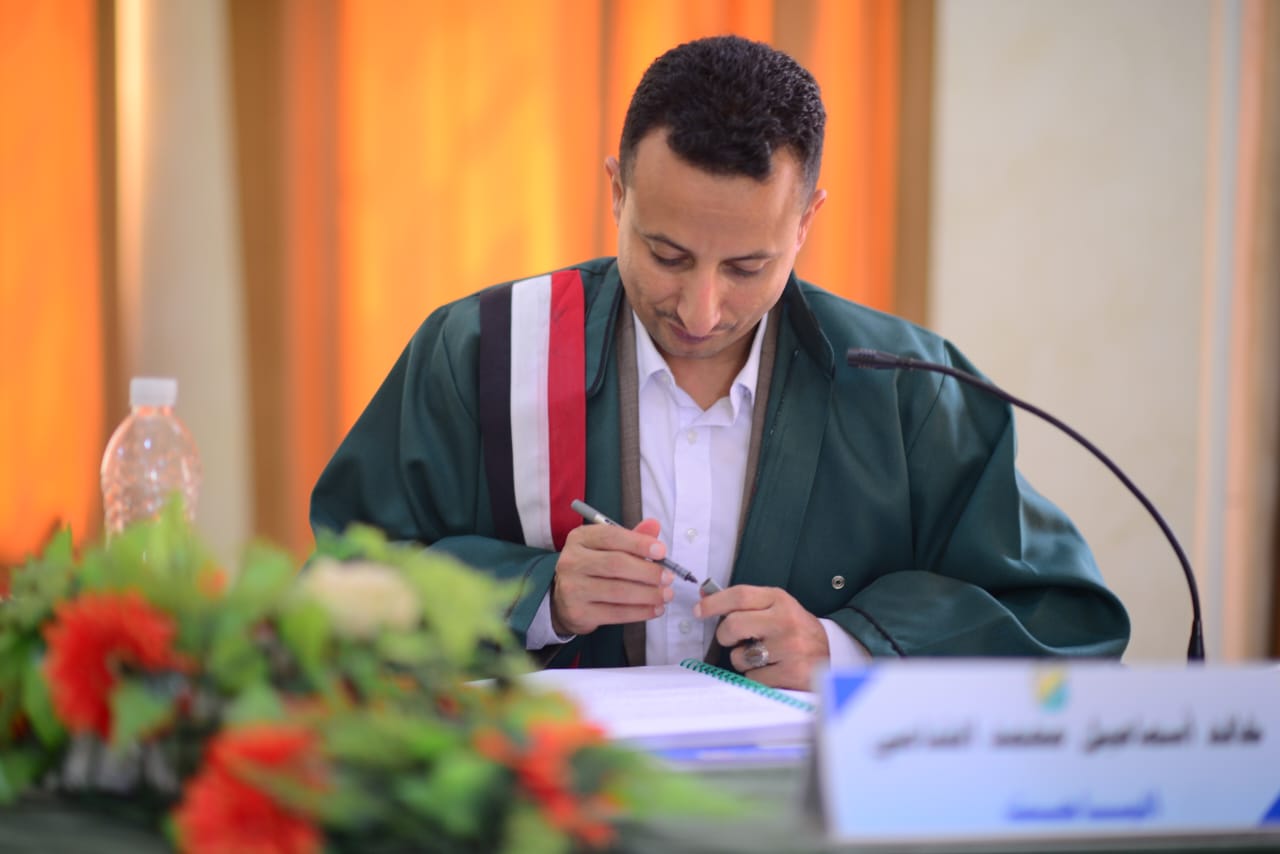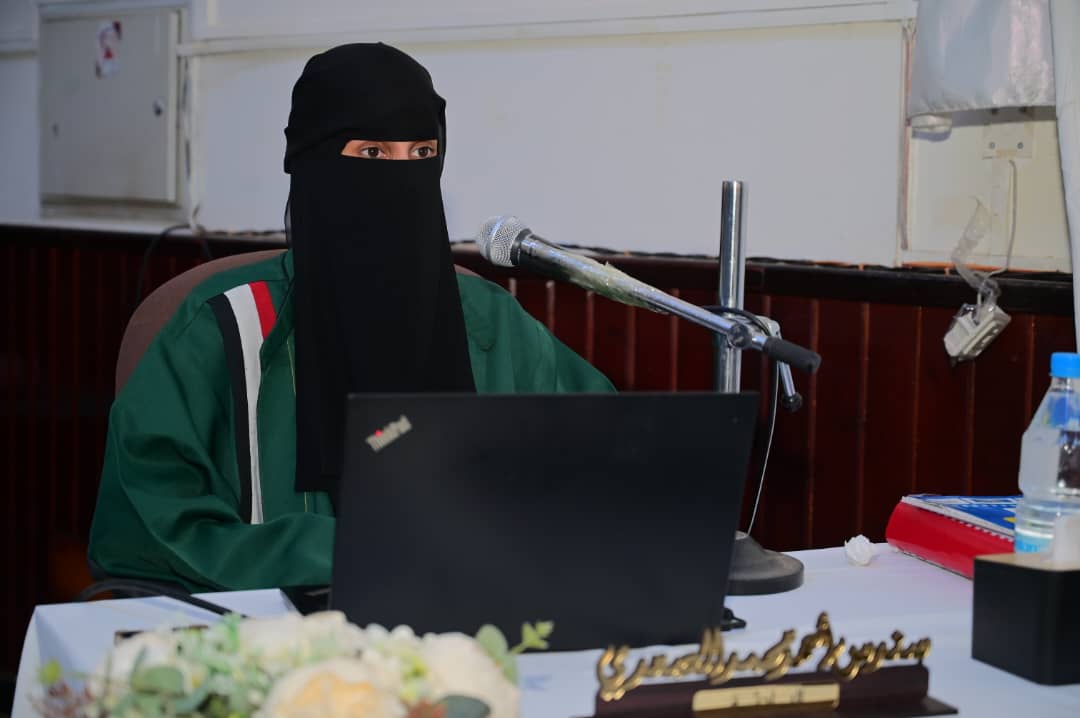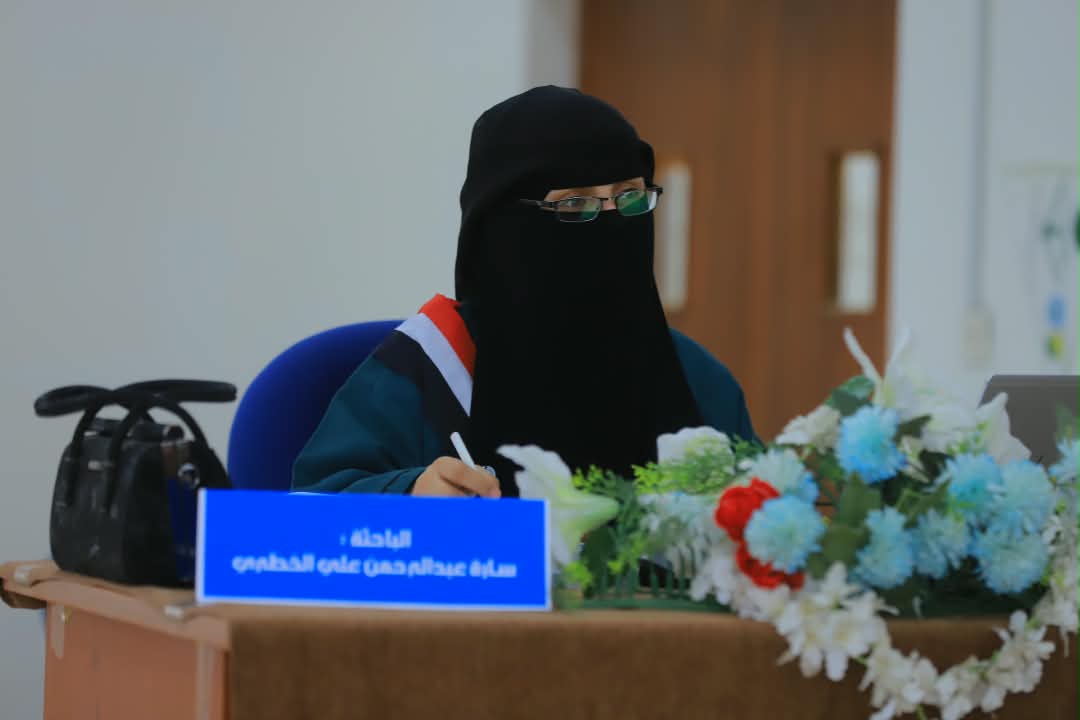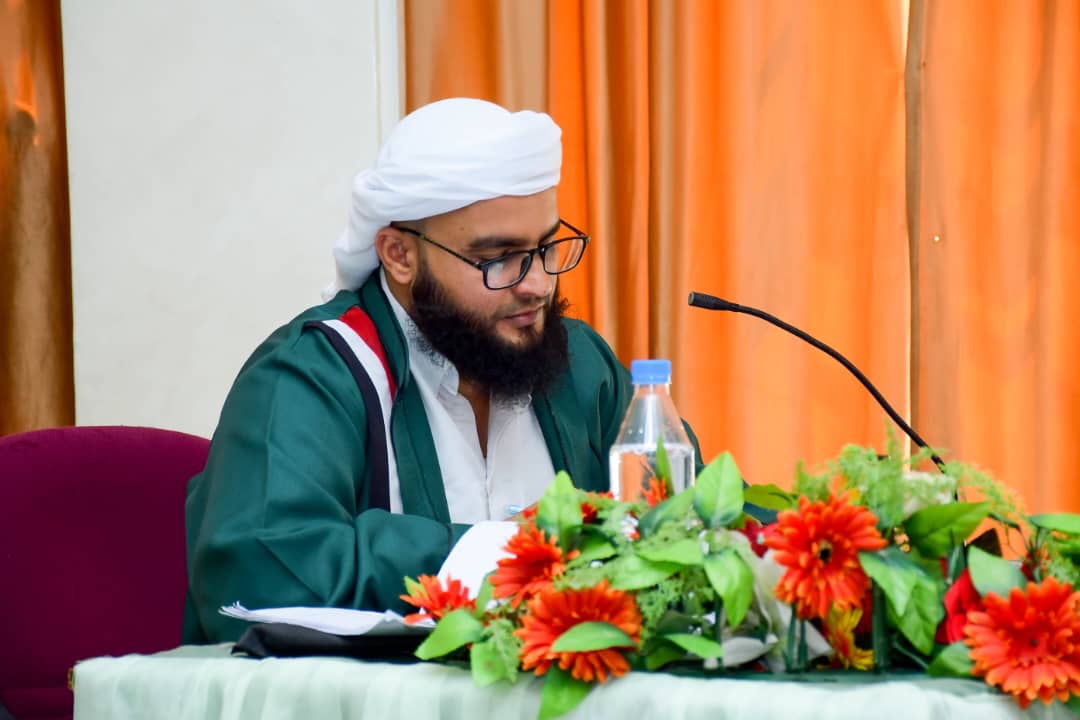
Researcher Abdullah Hussein Ahmed Enqad was awarded a Master’s Degree in Arabic Syntax and Morphology with a grade of excellent and an average of (94%) for his thesis titled: Jama Al-Mufradat” by Muhsin ibn Abdulkarim ibn Ishaq, deceased in 1266 Hijri, which was submitted to the Department of Arabic Language, Faculty of Languages, Sana’a University – Sana’a University. The MA defense was held on Monday, September 28, 2026.
The MA Viva-voce Committee, which was formed based on a resolution issued by the Graduate Studies and Scientific Research Council, consisted of the following:
• Prof. Nabila Ali Al-Mutawakkil – Sana’a University – Main Supervisor and Committee Member.
• Assoc. Prof. Akram Nasser Nasser – Sana’a University – Internal Examiner and Committee Chair.
• Prof. Abdullah Rajihi Ghanem – Hodeidah University – External Examiner and Committee Member.
The thesis aimed to introduce the scholarly contributions of a Yemeni scholar of the 13th century AH to the field of Arabic syntax by bringing to light and critically editing a manuscript that had remained unpublished for more than 170 years, in accordance with the established scholarly methods of critical editing recognized in academic circles.
The thesis reached a number of findings, most notably that the author arranged the material of the first chapter of Mughni Al-Labib by Ibn Hisham Al-Ansari in poetic verses and then followed each section with an explanation of the subject addressed in those verses. He did not confine himself to Ibn Hisham’s treatment; rather, he elaborated on the subject, discussed the various scholarly disagreements surrounding it, and often expressed an independent opinion.
The thesis also highlighted the nature of the scholarly connections that existed among scholars during that period despite the geographical distance between countries and the difficulties of communication.
The researcher made a number of recommendations, most notably calling on researchers to study this scholar and his scholarly contributions not only in Arabic grammar but also in other fields of knowledge, particularly given that some of his manuscripts have yet to be brought to light.
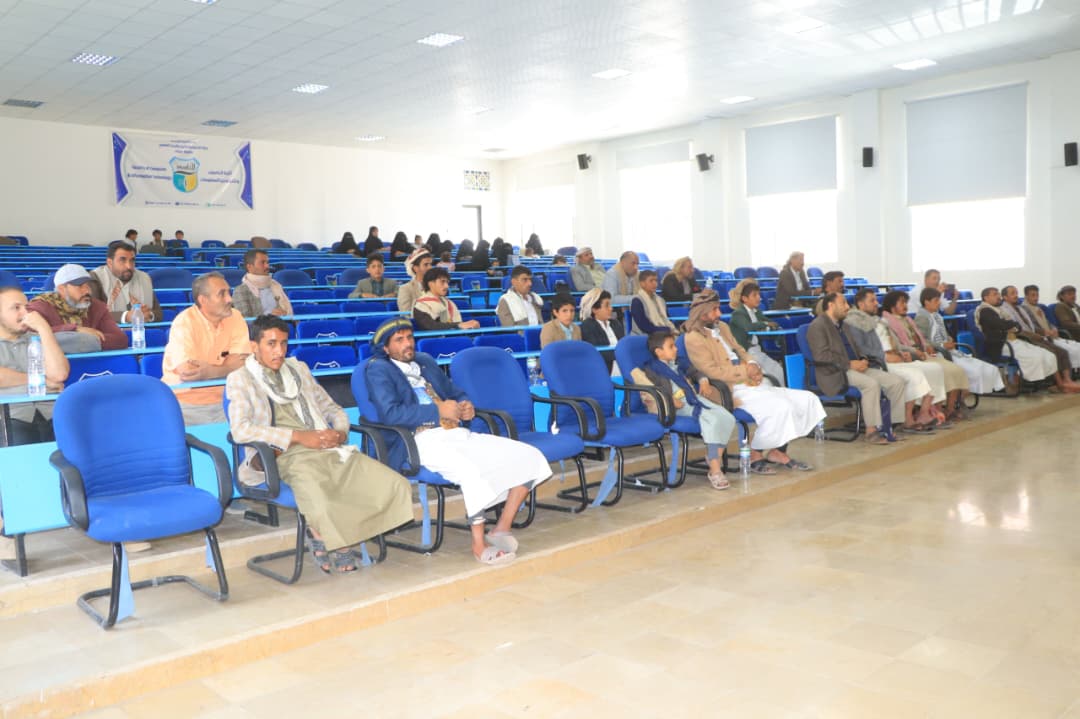
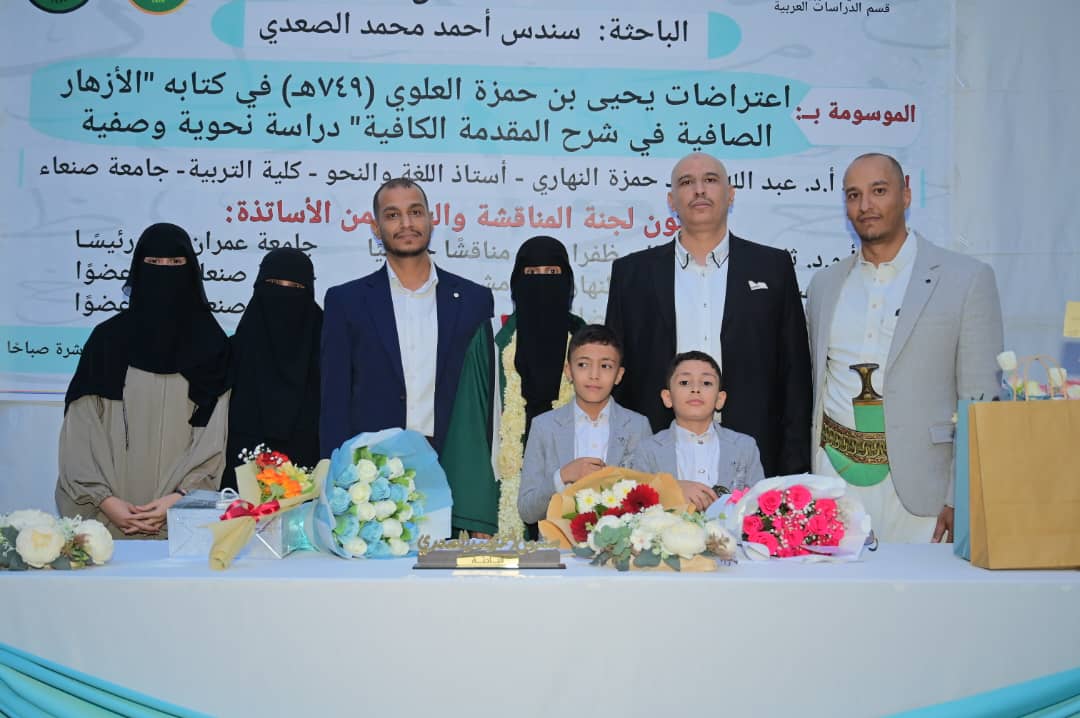
The thesis defense was attended by faculty members, researchers, students, and interested participants as well as the researcher's colleagues and family members.
.