Sana’a: Faculty of Agriculture, Food, and Environment Media Office
Wednesday, November 4, 2026
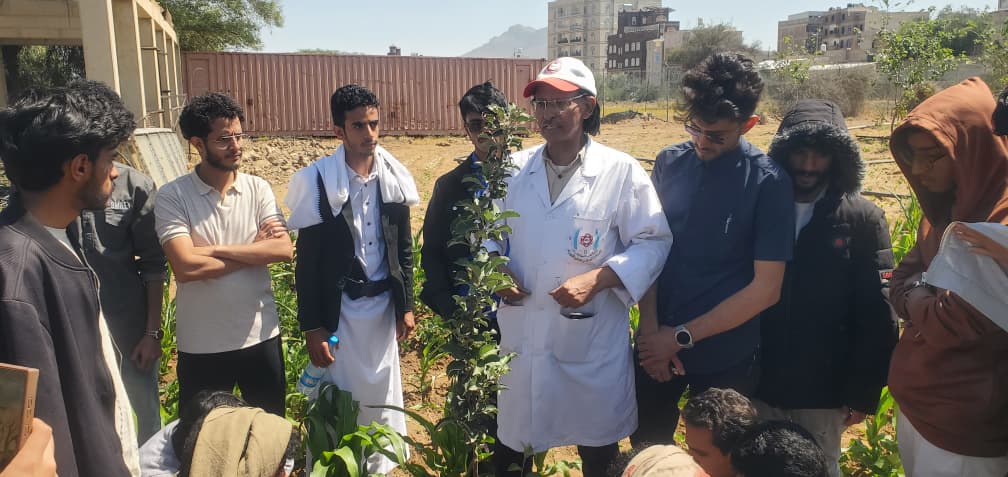
As part of the Faculty of Agriculture, Food and Environment at Sana’a University’s commitment to strengthening the integration of theoretical and practical learning and developing students’ professional and diagnostic skills, third- and fourth-year students from the Department of Animal Resources conducted a field-based veterinary assessment at the Faculty Farm. The visit followed an urgent report concerning an advanced health condition in a pregnant cow, accompanied by clinical signs that initially raised suspicion of dystocia, a condition requiring urgent veterinary attention. The field visit was supervised by veterinarian Dr. Bashar Al-Mawti.
The field visit aimed to provide students with an opportunity to apply their acquired veterinary knowledge and skills in clinical examination and diagnosis. It also enabled them to learn practical techniques for conducting reproductive examinations and manual palpation to assess the health of both the cow and the fetus, verify the observed clinical signs and symptoms, establish an accurate diagnosis, and determine appropriate therapeutic and nutritional measures under the supervision of a qualified veterinarian.
During the examination, the students, under the veterinarian’s supervision, performed detailed clinical and reproductive assessments, including an evaluation of the reproductive tract and an examination of the fetus’s position and viability. The findings confirmed that the uterus and cervix were healthy and that the fetus was viable and in a normal position. These results ruled out the initial suspicion of dystocia and redirected the diagnostic process toward identifying other underlying causes of the cow’s symptoms.
The clinical examination revealed a newly erupting tooth that was causing acute pain and localized gum bleeding when pressure was applied to the affected area during chewing. Further examination also revealed severe irritation of the pharyngeal mucous membranes, accompanied by significant difficulty swallowing (dysphagia). These findings were associated with the pain caused by the erupting tooth.
The diagnostic findings indicated that the pain and localized bleeding associated with tooth eruption had caused the cow to refuse coarse feed. This adversely affected its overall condition, resulting in lethargy and noticeably reduced rumen motility due to a substantial decline in feed intake and feeding activity.
Based on the examination and diagnostic findings, an appropriate treatment plan was identified. It included the use of non-steroidal anti-inflammatory drugs (NSAIDs) and analgesics to relieve pain and reduce inflammation associated with the erupting tooth, along with safe topical antiseptics for the oral cavity, general nutritional supplements, and vitamins, including the vitamin B complex, in accordance with appropriate veterinary recommendations.
The treatment plan also included nutritional recommendations aimed at maintaining the cow’s nutritional status and facilitating feed intake throughout the recovery period. These measures involved modifying the feed ration and providing soft, chopped green fodder, together with a moist, easily digestible and swallowable feed mixture. This approach was intended to minimize friction between the feed, the erupting tooth, and the affected gums, thereby reducing pain and localized bleeding until the tissues had healed and the painful stage had passed.
The field visit provided students with an advanced practical learning opportunity to perform clinical and reproductive examinations, understand differential diagnostic approaches to diseases in farm animals, correlate clinical signs and symptoms with diagnostic findings, and gain experience in determining appropriate therapeutic interventions and nutritional recommendations. These activities help strengthen their ability to manage various veterinary cases in accordance with sound scientific and professional standards.
This activity is part of a series of educational and practical initiatives undertaken by the Department of Animal Resources at the Faculty of Agriculture, Food and Environment. These initiatives aim to develop students’ practical skills, enhance their competencies in animal healthcare, veterinary diagnosis, and livestock production management, and prepare qualified professionals equipped with the scientific knowledge and field experience needed to contribute to the development of the livestock sector and improve animal health and productivity.
At the conclusion of the field visit, students from the Department of Animal Resources expressed their sincere appreciation to Dr. Bashar Al-Mawti for his direct supervision, professional guidance, and valuable scientific and practical insights, which enriched their knowledge and enhanced the educational value of this hands-on experience.
Animal Resources Students at Sana’a University Conduct Veterinary Assessment of an Emergency Case Involving a Pregnant Cow.
92 views
694 words
4 min read