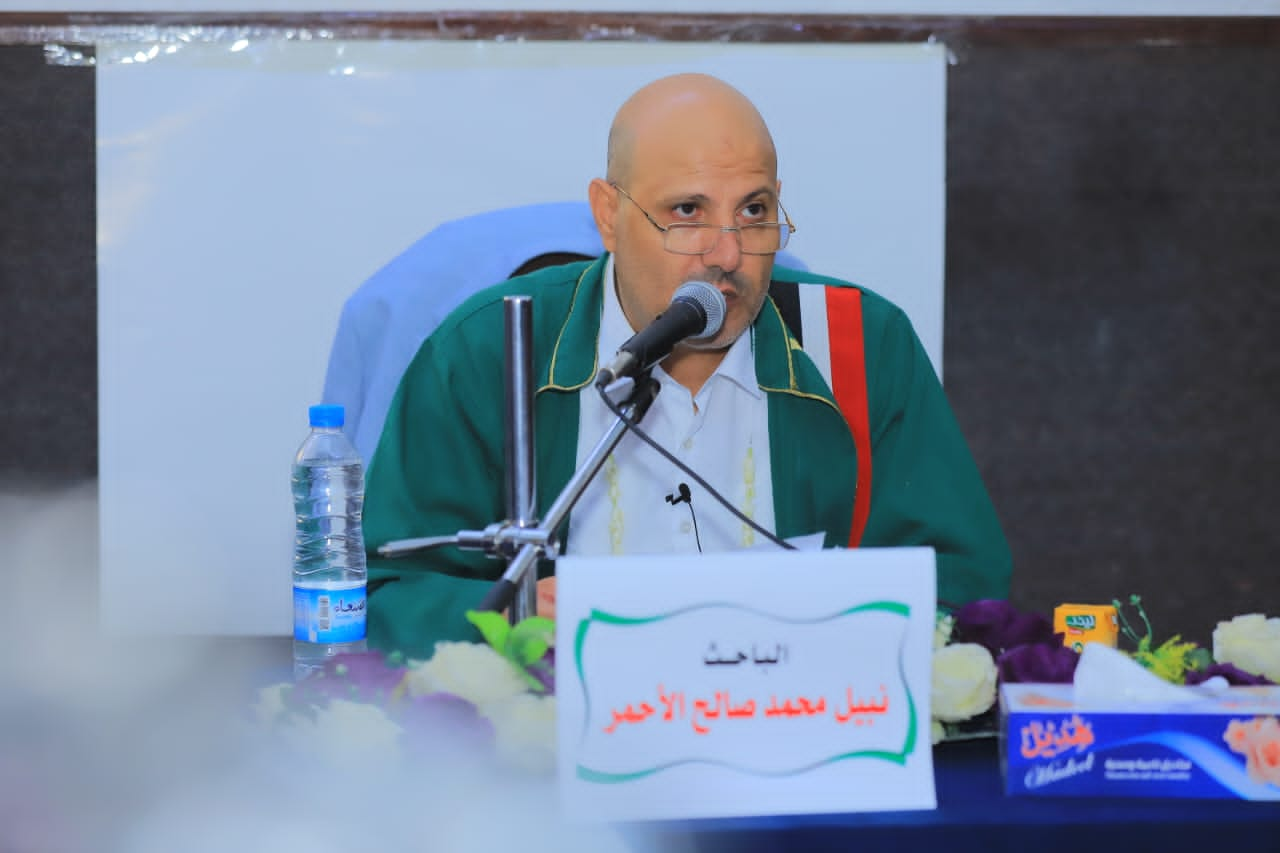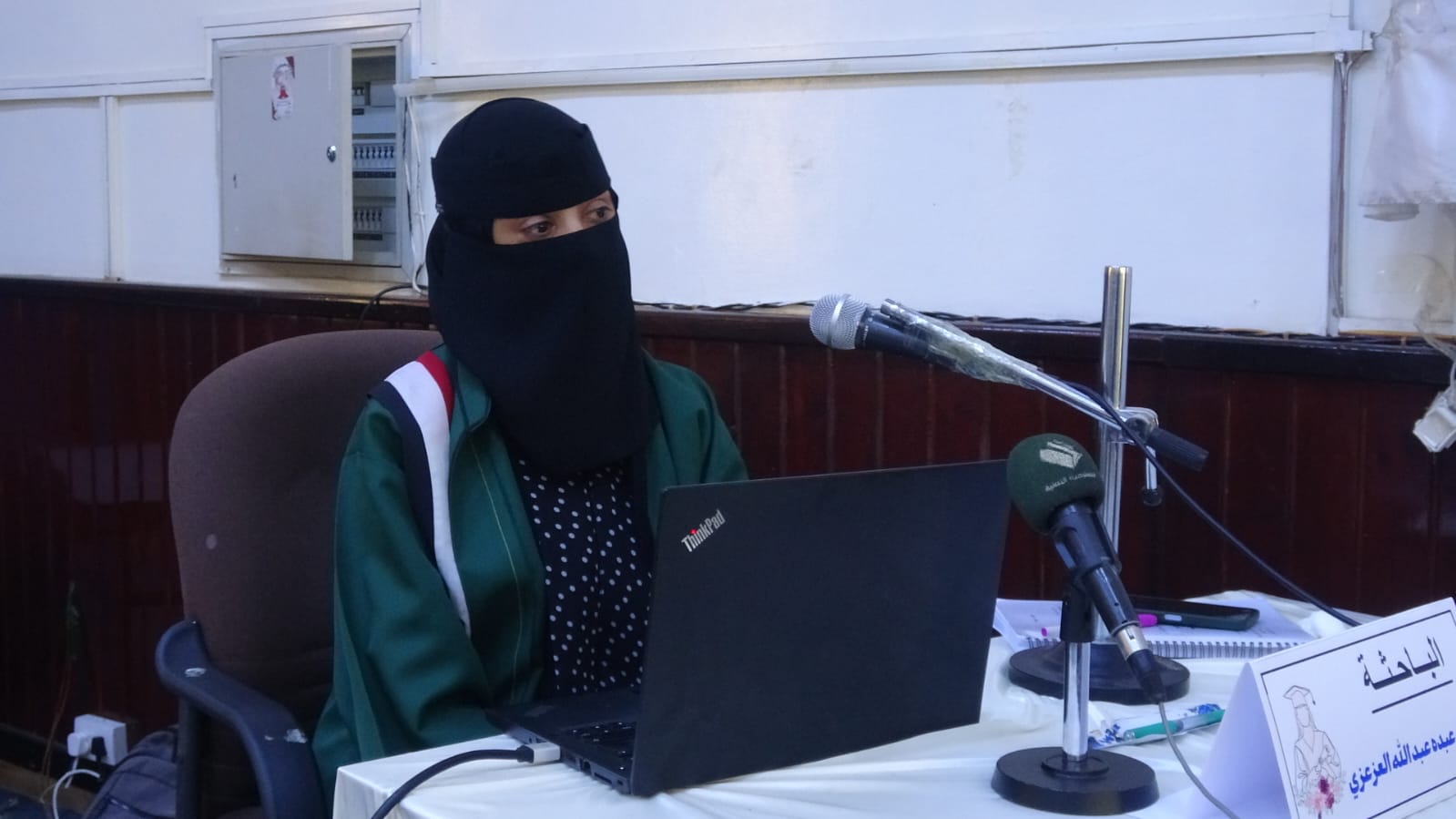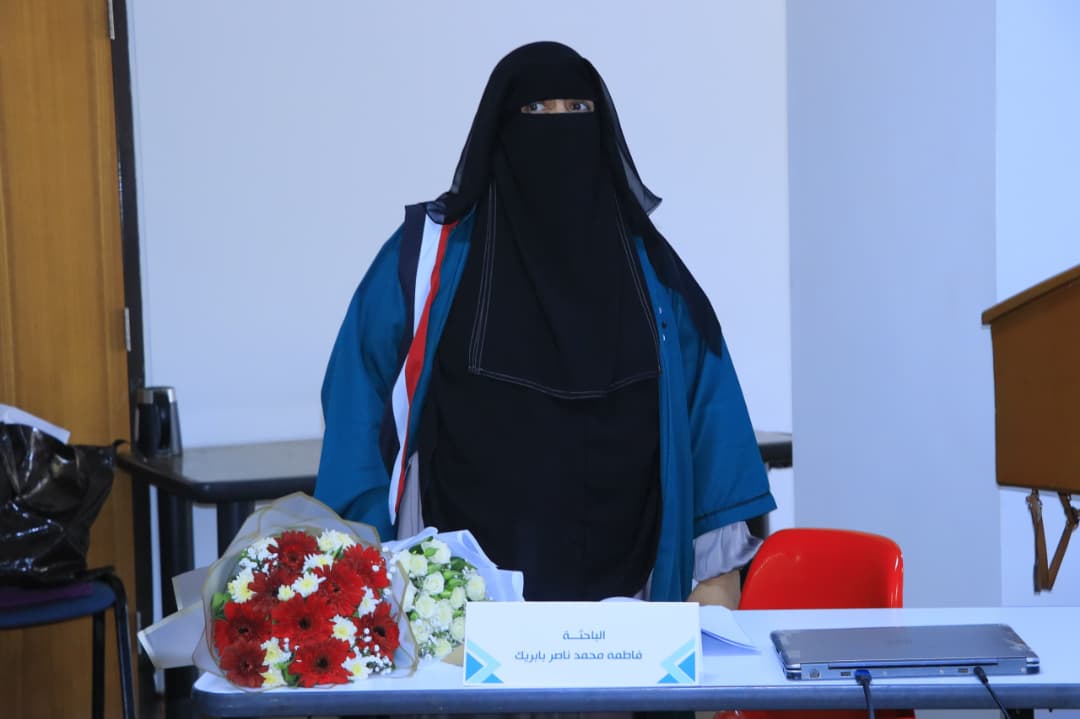
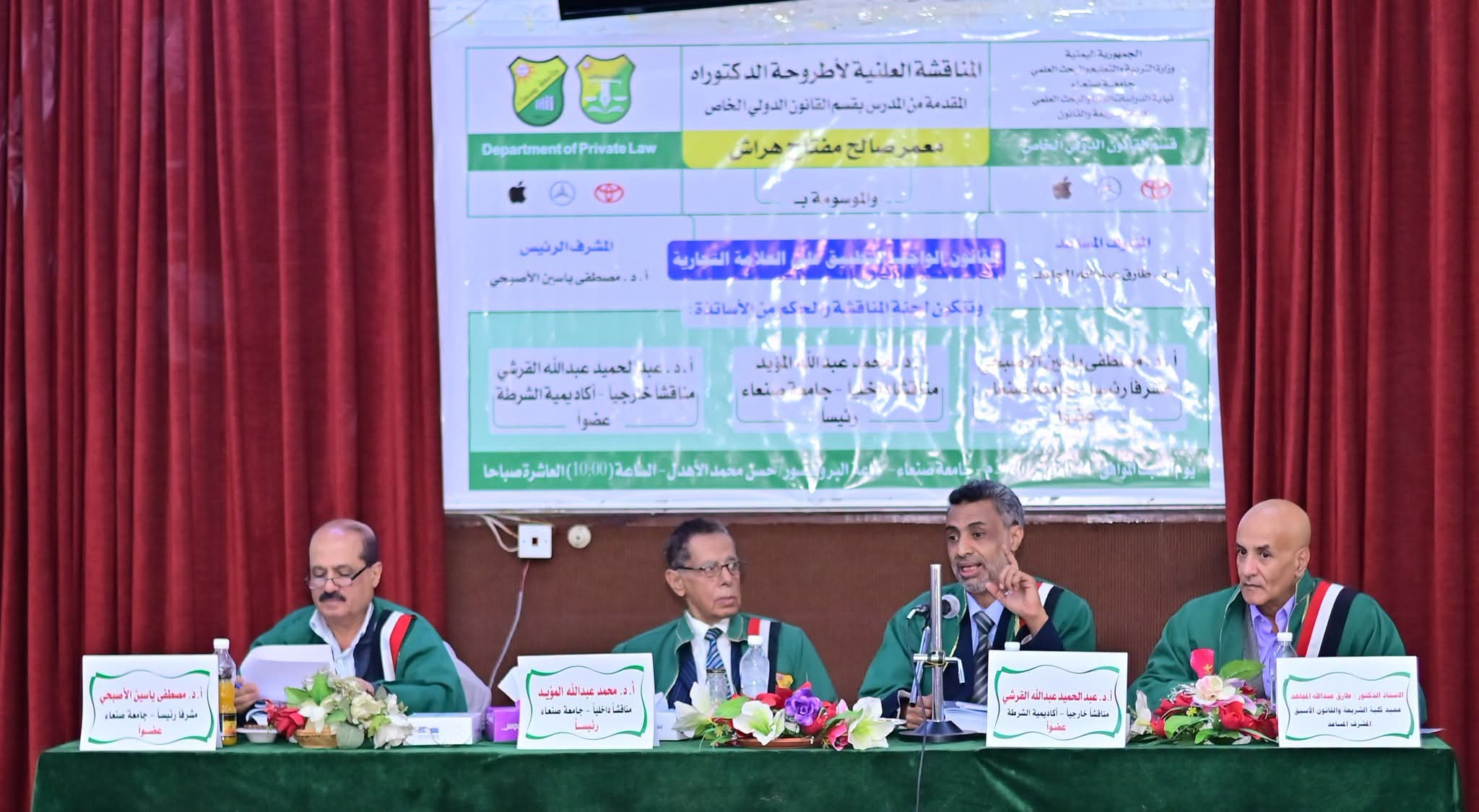
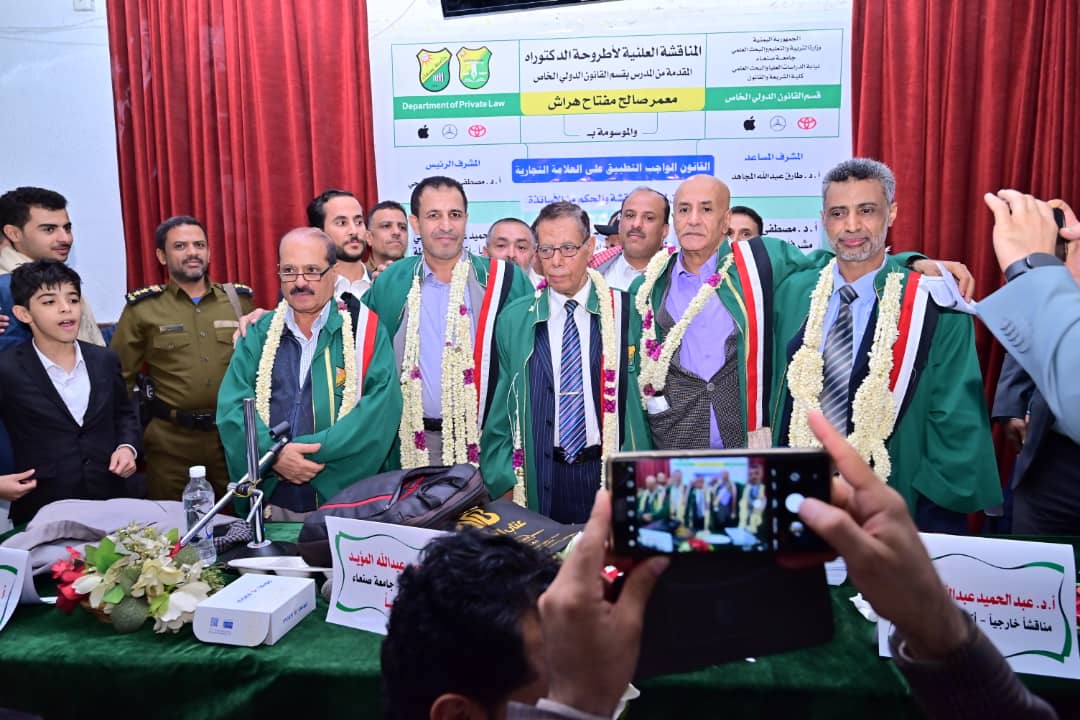
Researcher Muammar Saleh Meftah Harrash was awarded a PhD degree in private law for his dissertation titled: The Law Applicable to Trademarks, which was submitted to the Department of Private Law, Faculty of Sharia and Law–Sana’a University. The dissertation defense was held on Saturday, October 24, 2026.
The PhD Viva-Voce Committee, which was formed based on a resolution issued by the Graduate Studies and Scientific Research Council, consisted of the following:
• Prof. Mohammed Abdullah Al-Mu’ayyad – Internal Examiner and Chair.
• Prof. Mustafa Yassin Al-Asbahi – Supervisor and Committee Member.
• Prof. Tareq Abdullah Al-Mujahid – Assistant Supervisor.
• Assoc. Prof. Abdulhamid Abdullah Saeed Al-Qurashi – External Examiner and Committee Member.
The dissertation examined the determination of the law applicable to trademarks within the framework of private international law. It addressed the legal issues arising from trademark disputes involving a foreign element, particularly those related to the territorial nature of trademark rights and the various legal questions arising from the existence, infringement, and contractual exploitation of such rights.
The study reached several key findings summarized as follows:
1. The law of the country for which trademark protection is sought is the most appropriate connecting factor for determining matters relating to the existence, ownership, validity, and scope of protection of trademark rights, as well as identifying acts constituting infringement and the conditions governing liability arising from such acts.
2. Under Yemeni law, Article 33 of the Civil Code may serve as the legal basis for applying this connecting factor in the absence of a specific statutory provision. The study also favored interpreting Article 31 as being limited to guarantees or compensation arising from non-contractual acts committed abroad.
3. Regarding trademark exploitation agreements, the study concluded that they should be governed by the law expressly or implicitly chosen by the contracting parties. In absence of such a choice, the subsidiary connecting factors stipulated in Article 29 of the Yemeni Civil Code should apply. If these factors cannot genuinely be applied, Article 33 may be invoked, with the law of the state most closely connected to the contract serving as a guiding reference.
4. The study affirmed that international substantive rules, overriding mandatory rules, and public policy, despite their importance in regulating trademark disputes, cannot replace conflict-of-laws rules. It therefore proposed developing Yemeni legislation by introducing specific choice-of-law rules for such disputes, in a manner that reflects the territorial nature of trademarks and the requirements of international transactions.
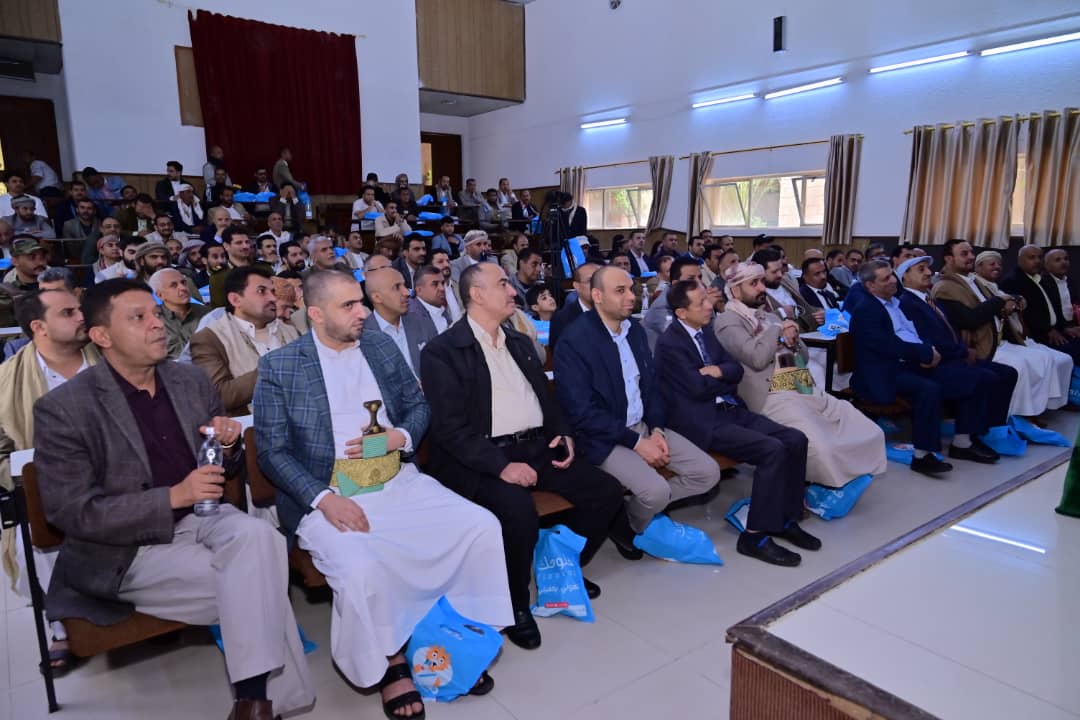
The dissertation defense was attended by a number of academics, researchers, and others interested in legal affairs, as well as the researcher’s colleagues and family members.”
https://youtube.com/shorts/uDDL7-gC_nY?si=fcaAUvrwvvr7_3cJ