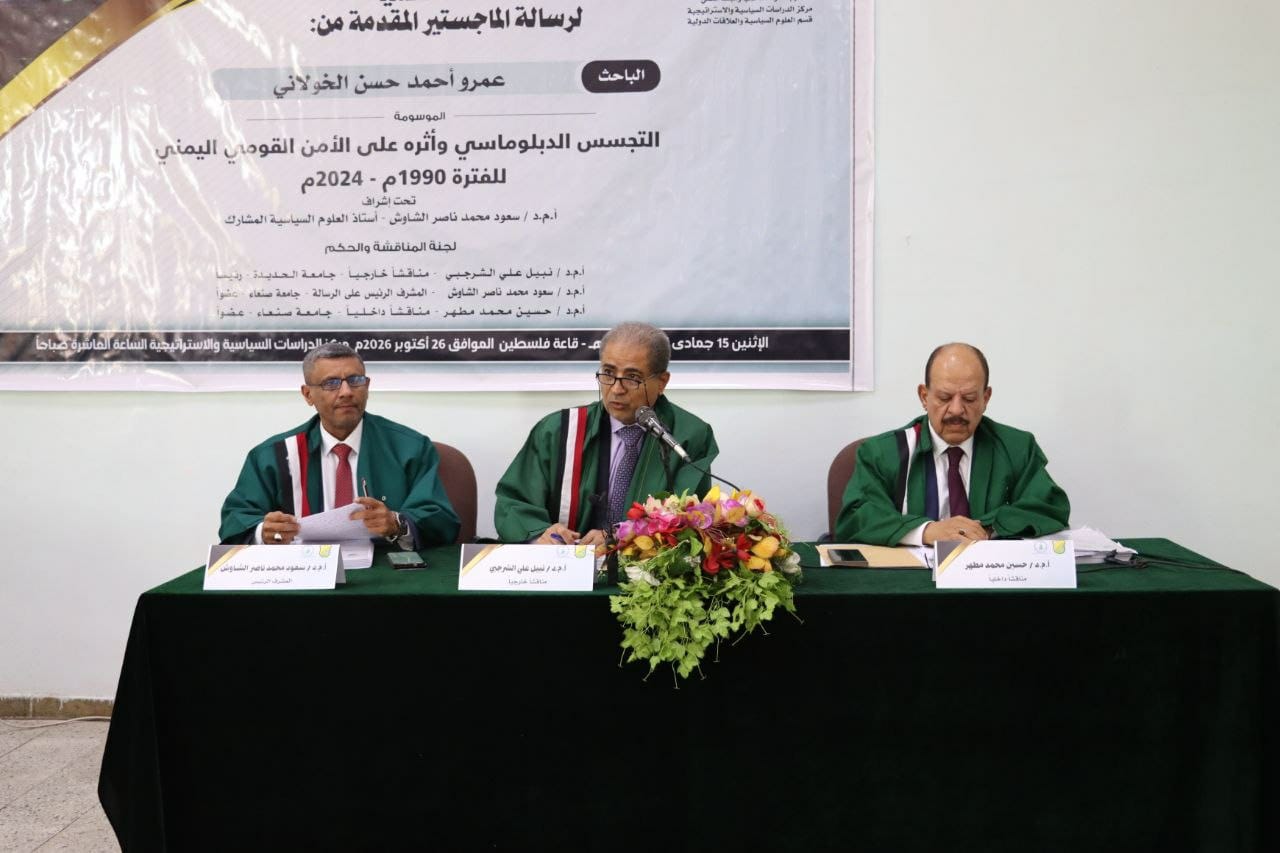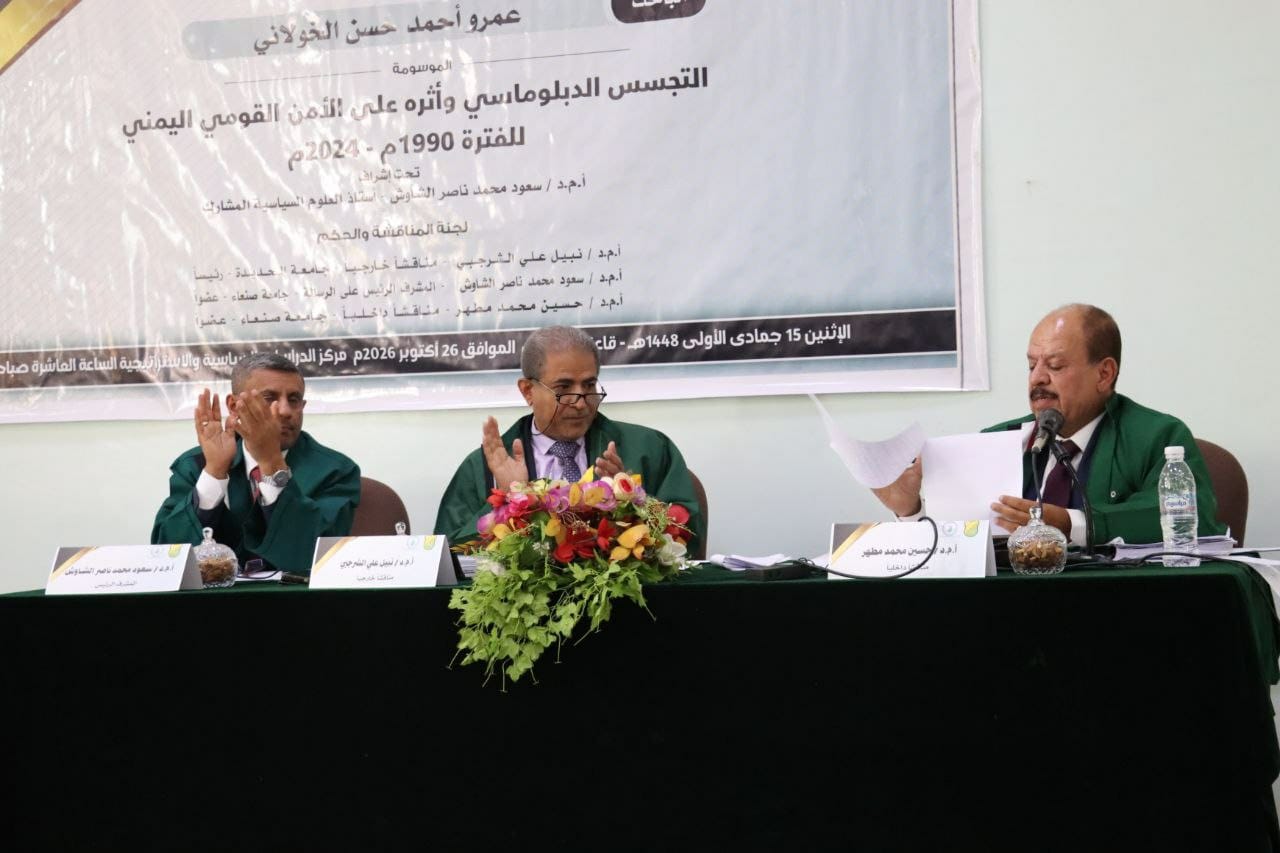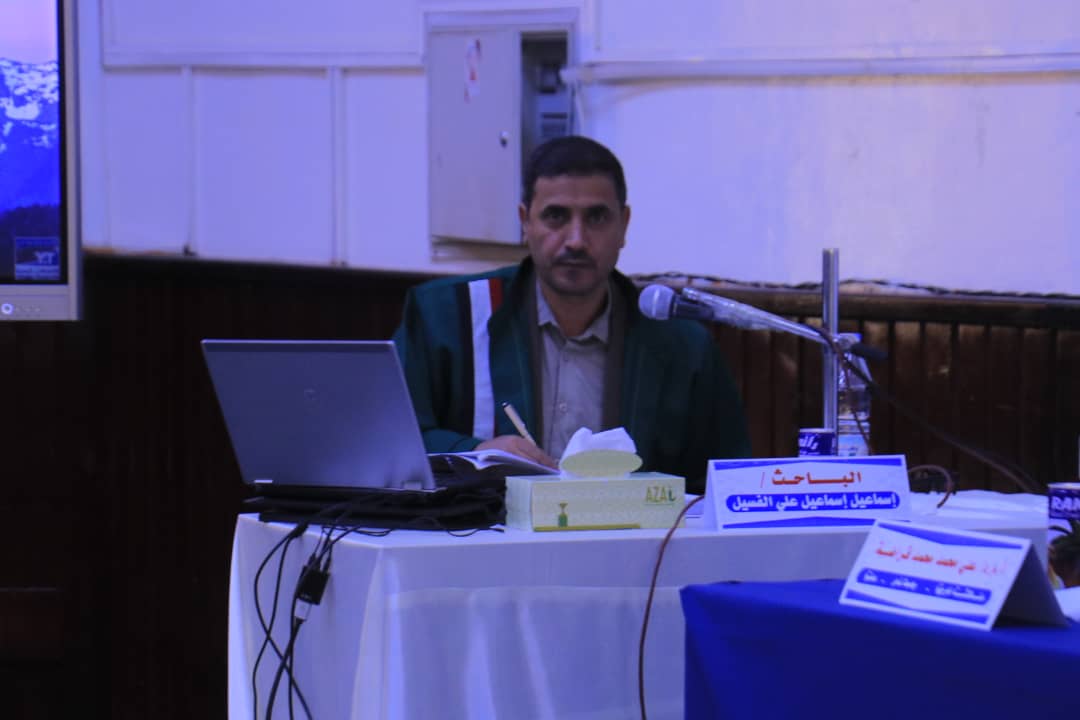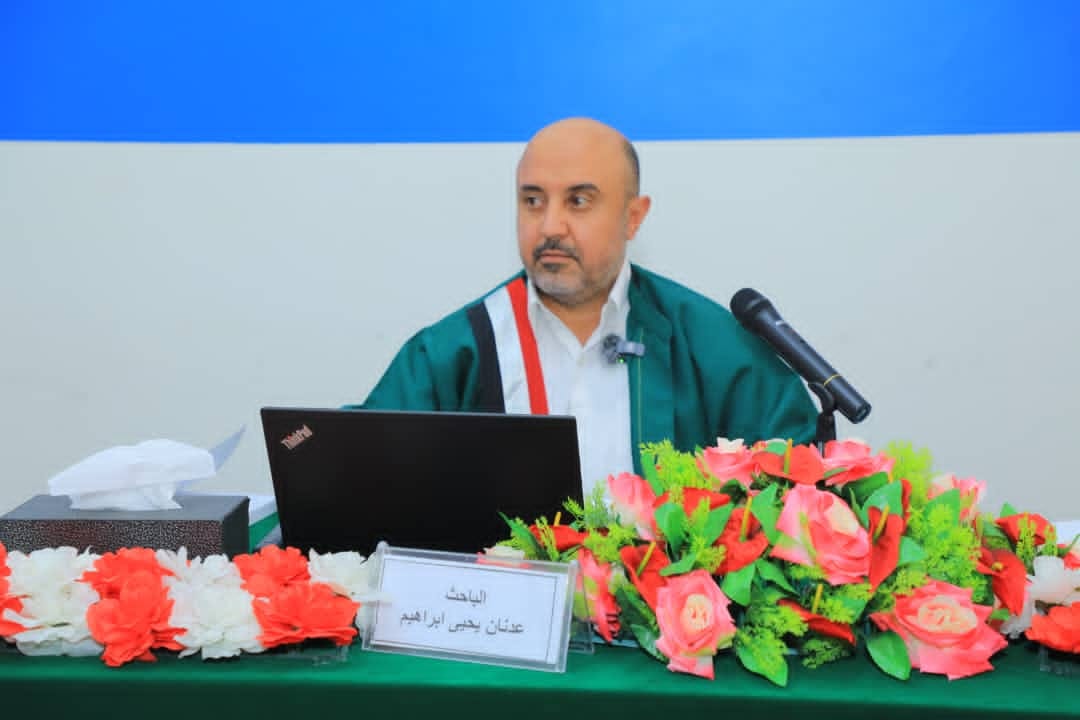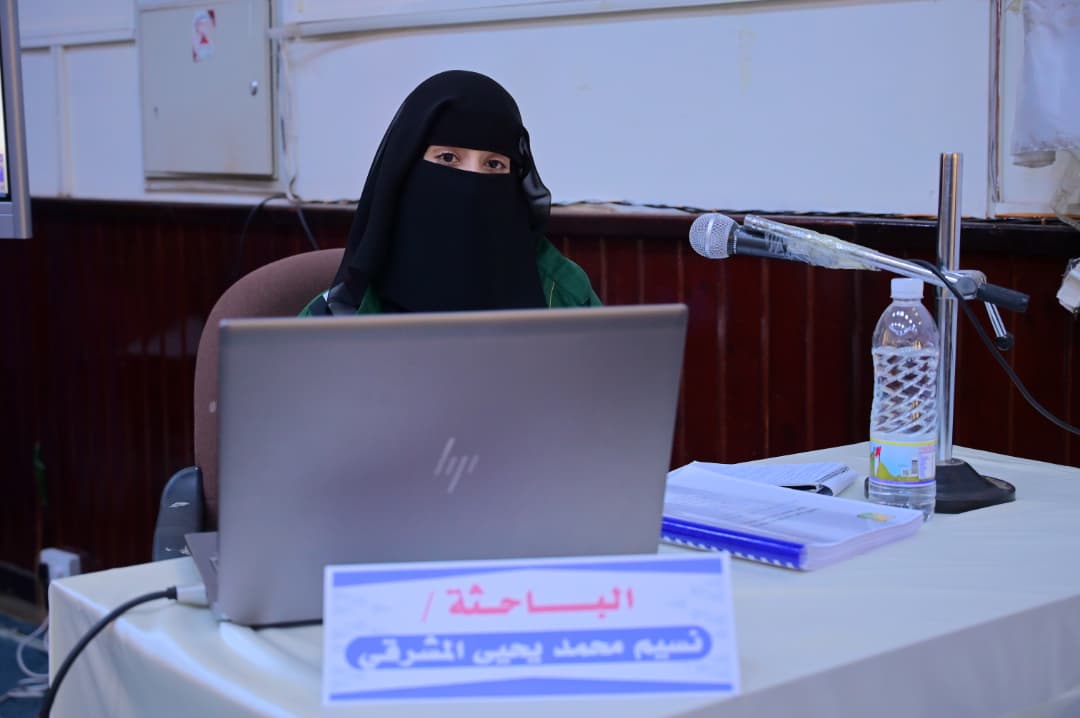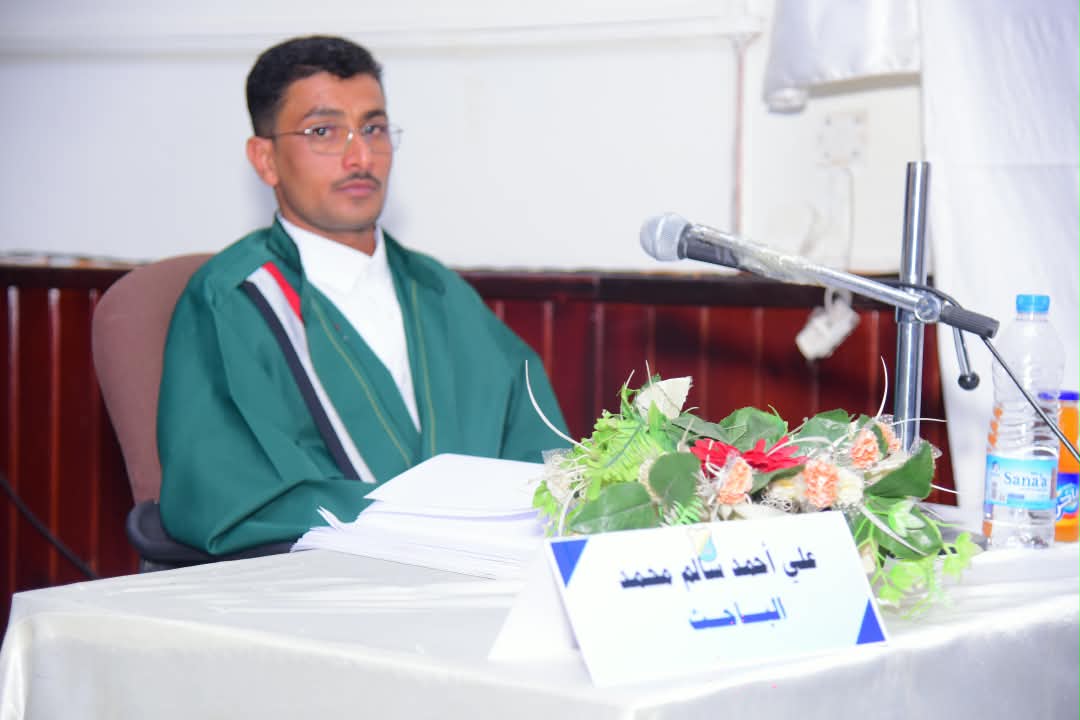
Researcher Amr Ahmed Hasan Al-Khawlani was awarded a Master’s Degree in Diplomacy and International Relations for his thesis titled: Diplomatic Espionage and Its Impact on Yemeni National Security (1990–2024), which was submitted to the Center for Political and Strategic Studies – Sana’a University. The MA defense was held on Wednesday, October 26, 2026.
The MA Viva-voce Committee, which was formed based on a resolution issued by the Graduate Studies and Scientific Research Council, consisted of the following:
• Assoc. Prof. Nabil Ali Al-Sharjabi –Hodeidah University – External Examiner and Chair.
• Assoc. Prof. Saud Mohammed Nasser Al-Shawsh – Sana’a University – Main Supervisor and Committee Member.
• Assoc. Prof. Hussein Mohammed Mutahar – Sana’a University – Internal Examiner and Committee Member.
The thesis aimed to explain the concepts of espionage and diplomatic espionage, including their types and forms; document the most notable cases of diplomatic espionage in Yemen examined during the specified period; and analyze their impact on national security, ultimately proposing approaches and solutions to counter such practices.
The study found that certain diplomatic missions exploit the immunities and privileges granted under international conventions and laws to engage in espionage activities against host states. It also emphasized the importance of national security as a fundamental pillar of state sovereignty and examined the legal issues arising from the abuse of diplomatic immunity, as well as the measures available to host states under international law, including declaring a diplomat persona non grata or taking other diplomatic measures. The thesis also examined various forms of diplomatic espionage that occurred in Yemen during the period under study.
The thesis recommended establishing a specialized department within the Yemeni Ministry of Foreign Affairs to combat diplomatic espionage, in coordination with the relevant security authorities, and activating the proposed mechanisms for countering such practices. It also recommended reviewing the 1961 Vienna Convention on Diplomatic Relations and the 1963 Vienna Convention on Consular Relations in light of international and security developments through the relevant international frameworks.
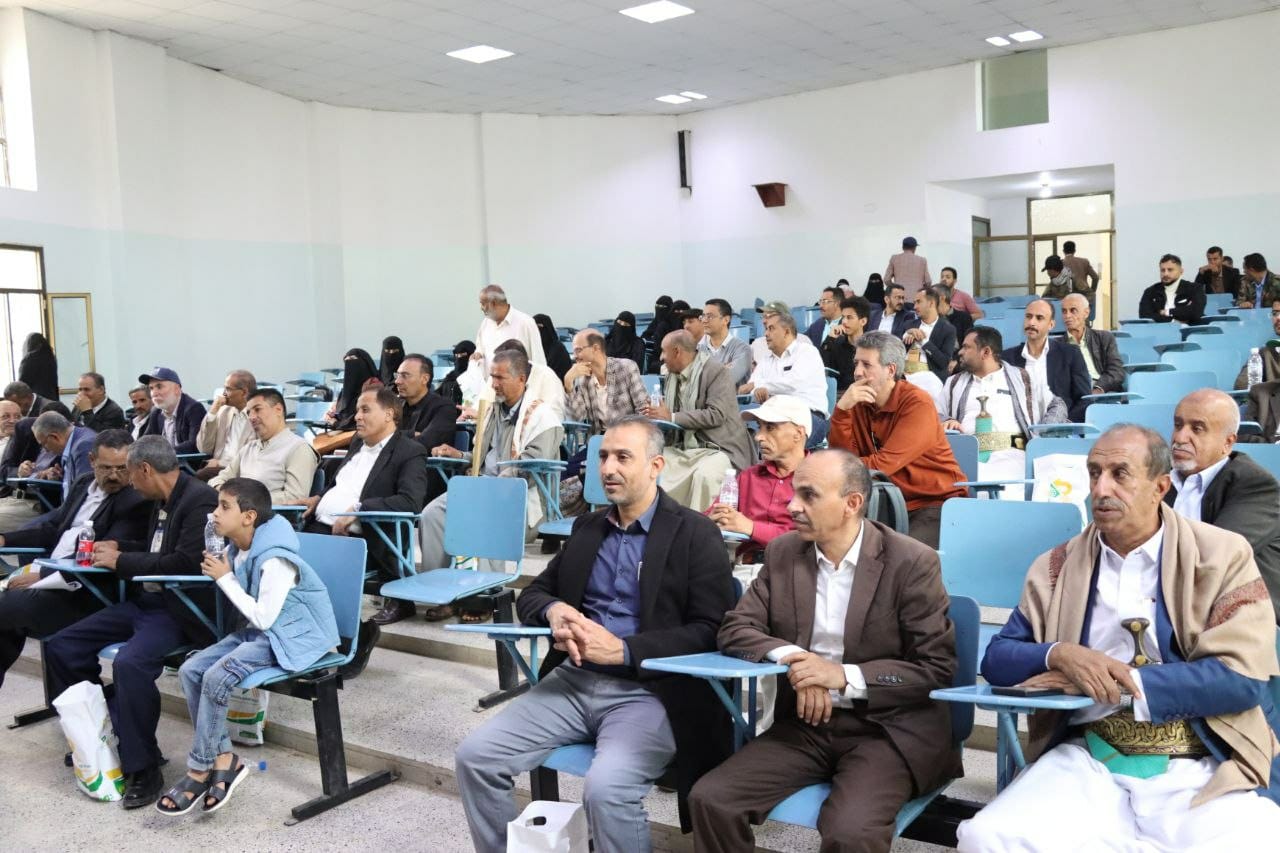
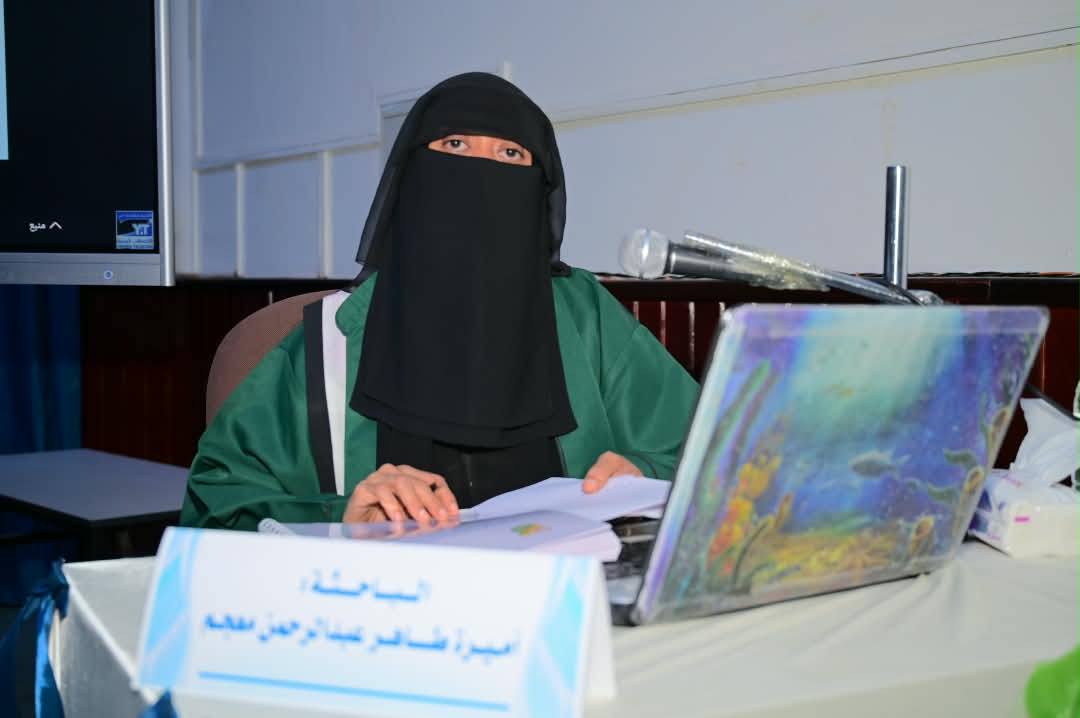
The thesis defense was attended by faculty members, researchers, graduate students, and interested participants as well as the researcher's colleagues and family members.