Master’s Degree Awarded to Researcher Widad Mohammed Mohammed Salah with Distinction in Public Health
•Faculty of Medicine and Health Sciences
43 views •
349 words •
2 min read
Researcher Widad Mohammed Mohammed Salah was awarded a Master’s Degree in Public Health with a grade of excellent and an average of (90%) for her thesis titled: Mental Disorders among Internally Displaced Women in Sana’a City, Yemen, which was submitted to the Department of Community Medicine, Faculty of Medicine and Health Sciences– Sana’a University. The MA defense was held on Monday, November 9, 2026.
The MA Viva-voce Committee, which was formed based on a resolution issued by the Graduate Studies and Scientific Research Council, consisted of the following:
·Prof. Abdullah Abdulaziz Muharram – Internal Examiner and Chair.
·Assoc. Prof. Abdulkhaleq Ahmed Obadi – Thamar University, External Examiner and Committee Member.
The study aimed to determine the prevalence of mental disorders, specifically anxiety, depression, and post-traumatic stress disorder (PTSD), among internally displaced women in Sana’a City. It also sought to identify the social, demographic, economic, and health-related factors associated with these disorders.
The study yielded several key findings summarized as follows:
Anxiety had the highest prevalence among the participating internally displaced women, at 53.8%.
The prevalence of depression was 31.3%, while post-traumatic stress disorder (PTSD) affected 15.9% of the participants.
Several factors were found to be associated with an increased likelihood of mental disorders, most notably older age, the presence of chronic diseases, and certain work-related factors, as well as the family’s economic and social circumstances.
Based on these findings, the researcher made several recommendations, including:
Strengthening early screening programs for mental disorders among internally displaced women and conducting regular psychological assessments for those at greater risk.
Integrating mental health and psychosocial support services into primary healthcare and establishing appropriate referral pathways for cases requiring specialized intervention.
Enhancing coordination among health offices, displacement-related authorities, and humanitarian organizations to develop psychosocial intervention programs that address the needs of internally displaced women.
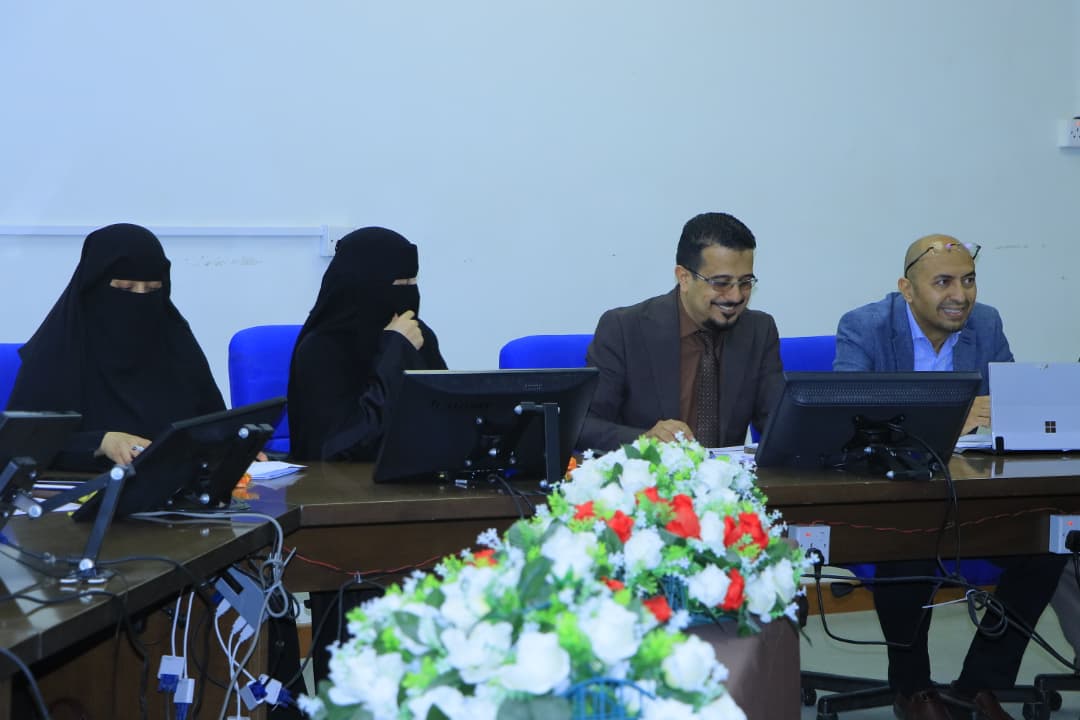
The thesis defense was attended by faculty members, researchers, graduate students, and interested participants as well as the researcher's colleagues and family members.