Sana'a University Faculty of Medicine and Health Sciences Hosts the 4th Scientific Conference on Respiratory Care 2026
•Faculty of Medicine and Health Sciences
54 views •
845 words •
5 min read
Faculty of Medicine and Health Sciences Media – Sana’a University
Sana’a – Thursday, October 29, 2026
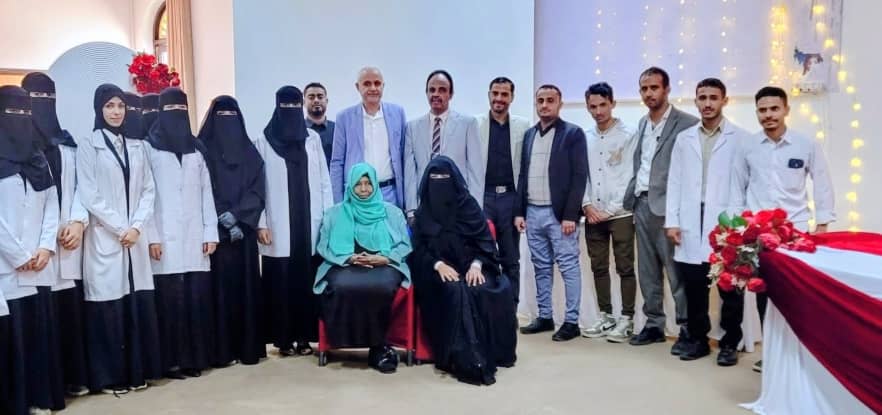
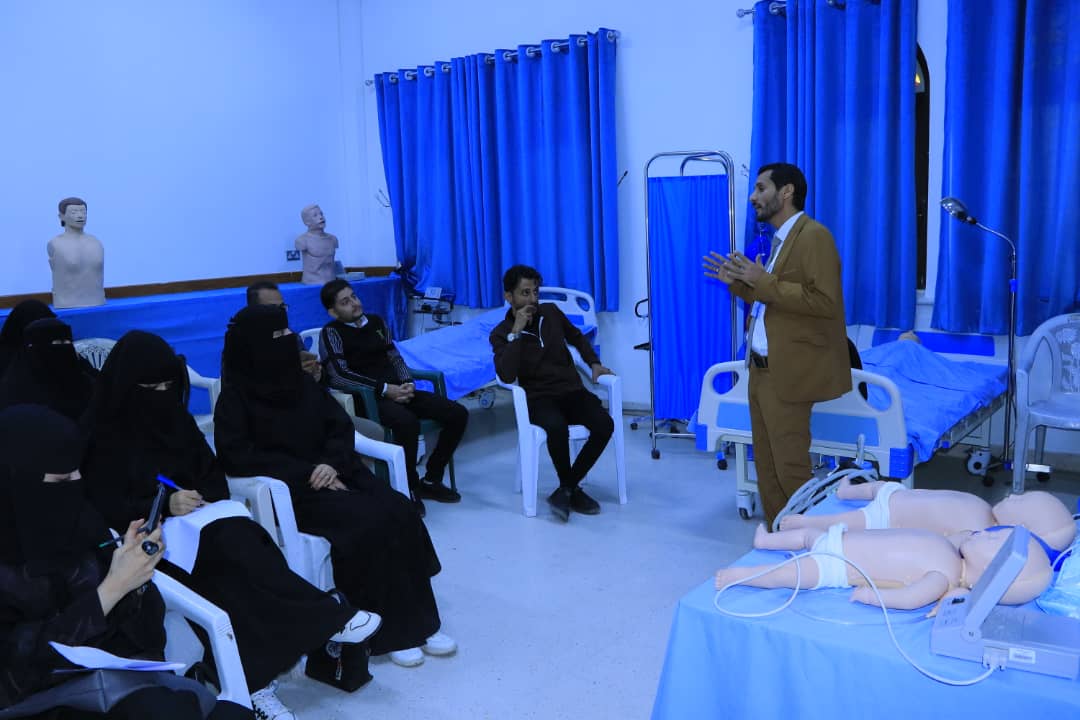
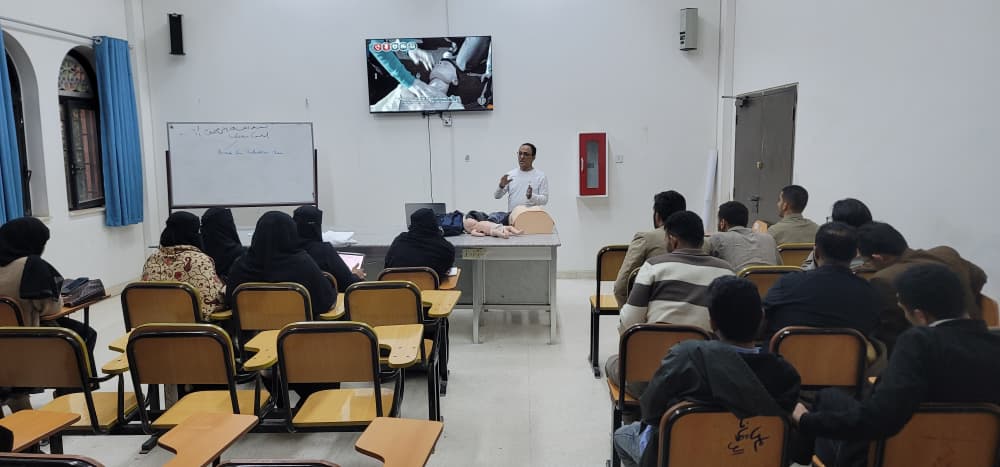
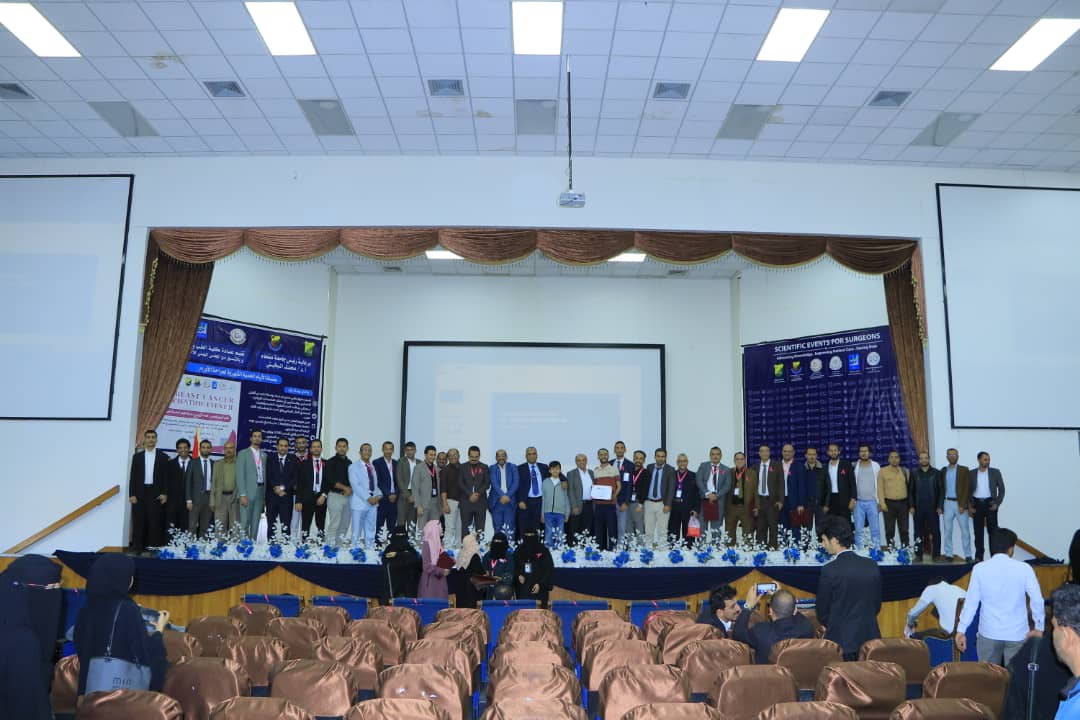
As part of the scientific events celebrating World Respiratory Care Week, the proceedings of the 4th Scientific Conference on Respiratory Care 2026 commenced today at Sana'a University. The event is organized by the Ministry of Public Health and Environment—represented by the General Directorate of Medical Services and Quality Assurance and the Directorate of Respiratory Care Services—in partnership with Sana'a University and its Faculty of Medicine and Health Sciences. The opening ceremony was attended by Prof. Mohammed Al-Bukhaiti, Sana'a University Rector; Prof. Mohammed Al-Shehari, Dean of the Faculty of Medicine and Health Sciences; Dr. Ali Al-Mufti, Director of Emergency and Quality Control at the Ministry of Health; and Dr. Bassam Al-Selawi, President of the Conference, alongside a large gathering of consultants, surgeons, respiratory care specialists, researchers, and medical students. In his opening address, Prof. Mohammed Al-Bukhaiti expressed pride in the institutional synergy between the university and the Ministry of Public Health and Environment. He emphasized that respiratory care has become an indispensable pillar of the modern healthcare system, ensuring patient safety and the success of complex surgical interventions. During his address, the University Rector launched a strategic academic initiative, directing the Deanship of the Faculty of Medicine and Health Sciences and its Quality Assurance Unit to immediately begin designing a specialized academic program in Respiratory Care. The initiative envisions degree offerings at both the undergraduate and graduate levels—or initiating a dedicated graduate program—built upon top international benchmark standards to meet the operational demands of the national healthcare sector. Prof. Al-Bukhaiti highlighted Sana'a University and its Faculty of Medicine's academic prestige, noting that the faculty serves as the primary provider of medical professionals in Yemen. Its graduates serve across national health sectors as well as regional and international arenas, describing them as "heroes of sacred humanitarian duty." He added that the Faculty of Medicine ranks first across the university in scientific research and specialized publications, competing strongly on regional and international research platforms. Regarding global rankings, the University Rector noted that Sana'a University recently achieved a qualitative leap in international indices, ranking 750th in Asia according to the AD Scientific Index for research and academic citations. Emphasizing the university’s institutional philosophy, he stated: "Advancing in global quality rankings is not merely a display goal to boost academic credentials; rather, it is the natural product of building a solid educational infrastructure, rigorous academic preparation, and the continuous development of research and scientific output." For his part, Prof. Mohammed Al-Shehari, Dean of the Faculty of Medicine and Health Sciences, welcomed the attendees and expressed the faculty's honor in hosting this scientific gathering in collaboration with the Ministry of Health and Environment. He commended the high operational readiness demonstrated by the faculty's Simulation and Clinical Skills Laboratory during yesterday's six training workshops, emphasizing its standing as a unique training facility nationwide. Drawing from his clinical experience as a consultant surgeon, Dean Al-Shehari stressed that no surgical intervention can achieve its full success rate without the active presence of a respiratory care specialist. Acting as the first line of defense in monitoring patients and managing airways, respiratory specialists mitigate perioperative and postoperative complications, illustrating the complementary relationship between surgical teams and respiratory therapists. Dr. Ehab Obaid, Chair of the Conference Preparatory Committee, delivered a speech welcoming participants and praising the effective partnership between the Ministry of Health and Sana'a University's Faculty of Medicine and Health Sciences. He noted that the conference represents a milestone in scientific maturity, aiming to align local clinical practices with the latest global advancements in this specialized field. Today's scientific sessions build upon the momentum generated yesterday, when the faculty hosted six intensive hands-on workshops in its Simulation and Clinical Skills Laboratory, focusing on developing field skills for medical staff handling critical respiratory cases. Following the opening ceremony, the conference initiated its academic sessions, featuring research papers and specialized lectures across two main tracks: • First Scientific Session: Chaired by a panel comprising Dr. Altaf Al-Kamish, Dr. Ali Al-Sayya, Dr. Fahim Al-Absi, and Dr. Maher Muneer Ghaith. Papers focused on the institutional recognition and hospital leadership of respiratory care in Yemen, "Knowledge-to-Lifesaving" applications, non-invasive ventilation (NIV) weaning techniques, respiratory management of neuromuscular disorders, and managing life-threatening acute asthma. • Second Scientific Session: Chaired by Prof. Nouraddeen Al-Jaber, Dr. Bassam Al-Selawi, Dr. Najla Al-Sonboli, and Dr. Ali Al-Mufti. Presentations centered on mechanical ventilation in Pediatric Acute Respiratory Distress Syndrome (PARDS), a clinical case study on pneumopericardium, future prospects of respiratory care in the age of AI, and the updated 2026 respiratory care standards approved by the Ministry of Public Health and Environment. The event concluded with an interactive discussion between researchers and attendees, followed by honoring the organizing and scientific committees. Participants unanimously reaffirmed the importance of translating conference recommendations into operational programs that serve Yemen's healthcare system.