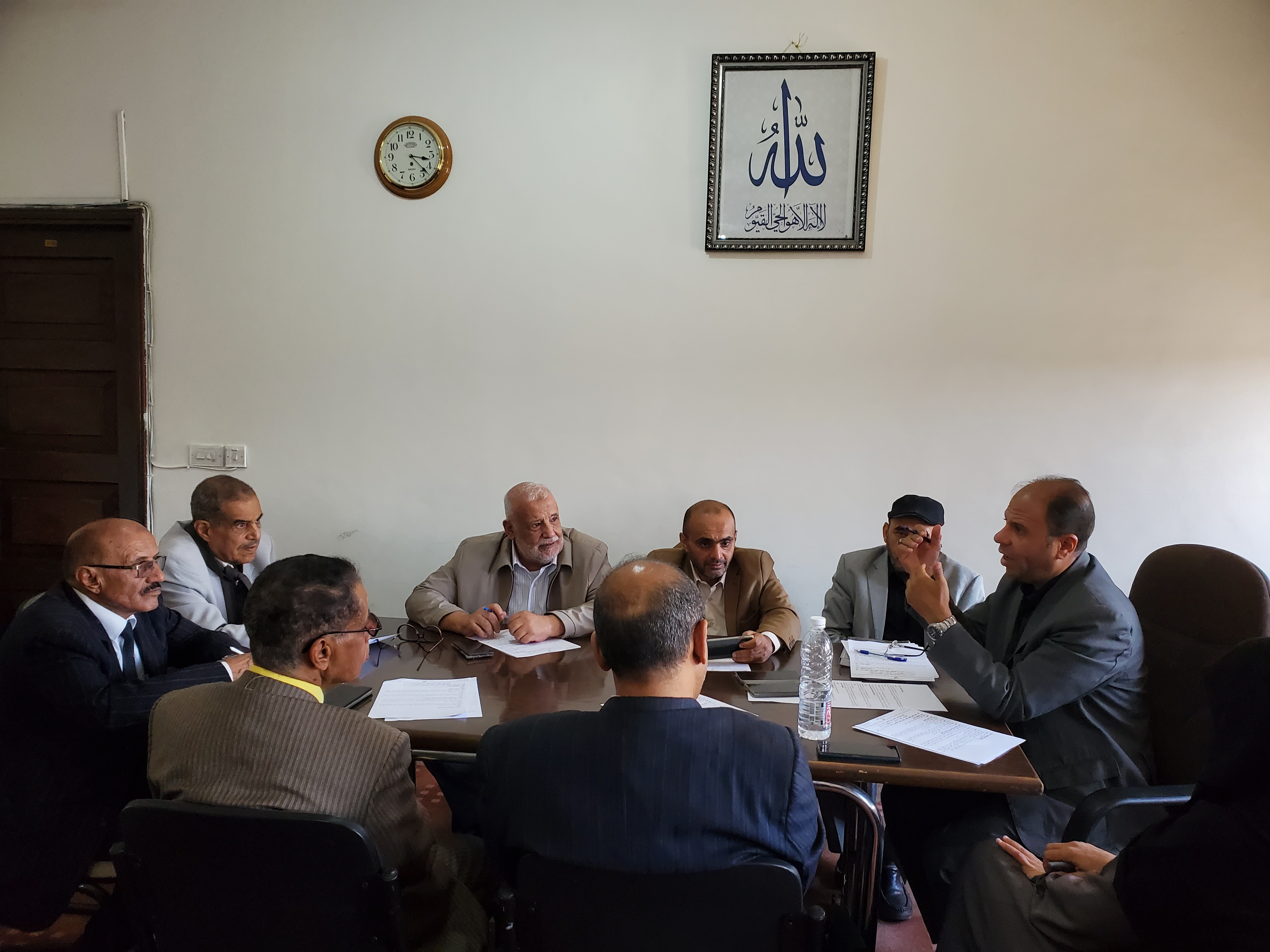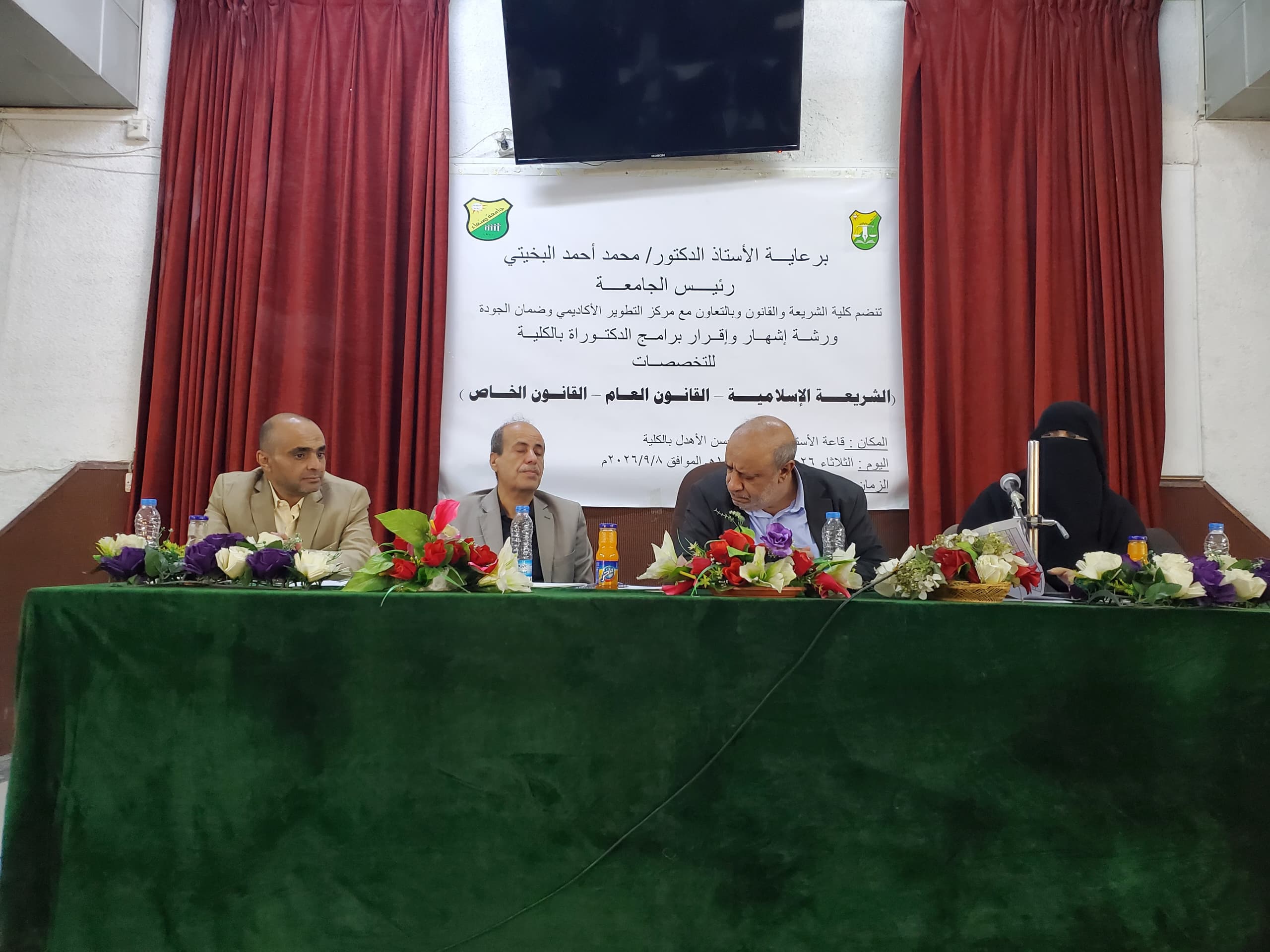
Researcher Yasser Khaled Ali Ahmed Al-Qulaisi was awarded a PhD degree in Public Law for his dissertation titled: Judicial Review of Administrative Decisions and Its Impact on Safeguarding Individual Rights under Yemeni Legislation, which was submitted to the Department of Public Law, Faculty of Sharia and Law –Sana’a University. The dissertation defense was held on Wednesday, October 21, 2026
The PhD Viva-Voce Committee, which was formed based on a resolution issued by the Graduate Studies and Scientific Research Council, consisted of the following:
Prof. Hamoud Mohammed Dabwan Al-Qudaimi – External Examiner and Chair.
Prof. Mutea Ali Hamoud Jubair – Supervisor and Committee Member.
Assoc. Prof. Mohammed Ali Suleiman – Internal Examiner and Committee Member.
The study aimed to:
Clarify the legal framework governing judicial review of administrative decisions under the Yemeni legal system, define the scope and limits of such review, identify the elements and conditions required for the validity of administrative decisions, and explain how courts review them.
Examine the role of judicial review in protecting individual rights against unlawful administrative decisions, analyzing both their substantive and procedural aspects to identify shortcomings and propose remedies that could strengthen judicial oversight and improve its effectiveness in safeguarding individual rights.
Contribute to raising legal awareness among both government administrative officials and members of the public, enabling individuals to seek judicial recourse to defend their rights.
Highlight the importance of establishing an independent Yemeni administrative judiciary and its role in upholding the rule of law and protecting individual rights.
The study yielded several key findings summarized as follows:
The exceptional circumstances Yemen has experienced have affected the functioning of public administration, particularly through the issuance of unlawful administrative decisions that have adversely affected individuals’ rights and freedoms.
Judicial review of administrative decisions in Yemen has proved an effective means of protecting the right to public employment, the right of access to justice, the right to property, the right to equality, and other civil and political rights. It has also helped protect various economic and social rights associated with employment and livelihood stability, as well as cultural rights, including the right to education. Such protection has been achieved through the annulment of unlawful administrative decisions and compensation for the resulting harm, in accordance with the principle of legality.
The French and Egyptian administrative judiciaries have made substantial progress in protecting individual rights by expanding judicial review to cover a broad range of rights and developing review of the appropriateness of administrative decisions. This has helped establish judicial principles that strengthen the protection of individual rights and freedoms. Although the Yemeni judiciary has made some progress, it remains less effective in protecting these rights than its French and Egyptian counterparts.
The effectiveness of judicial review is closely linked to the independence of the judiciary and its freedom from executive interference in its work or attempts to influence the enforcement of its judgments.
Individuals in Yemen make relatively limited use of compensation proceedings to seek redress for harm caused by unlawful administrative decisions, compared with annulment proceedings. This may be attributable to limited public legal awareness, attempts to resolve disputes amicably with the administration out of fear of reprisals, concerns about lengthy litigation, and the risk that administrative authorities may fail to enforce court judgments.
Some Yemeni judicial rulings in similar administrative disputes vary or conflict with one another. This is partly attributable to limited specialization and judicial expertise in administrative law, which has adversely affected the protection of individual rights.
In light of these findings, the study proposes the following recommendations:
The legislature should promptly modernize the legislation governing administrative litigation in Yemen to strengthen the judiciary’s role in protecting individual rights and freedoms.
Legal and institutional safeguards should be established to reinforce judicial independence in Yemen, ensuring that courts exercise their review powers free from executive influence or interference.
Yemeni courts should expand their review of the appropriateness of administrative decisions to provide more effective protection for individual rights and freedoms. Administrative authorities should be required to remain within the legal limits governing the issuance of decisions and should not abuse their discretionary powers by issuing arbitrary decisions that infringe individual rights under the pretext of serving the public interest.
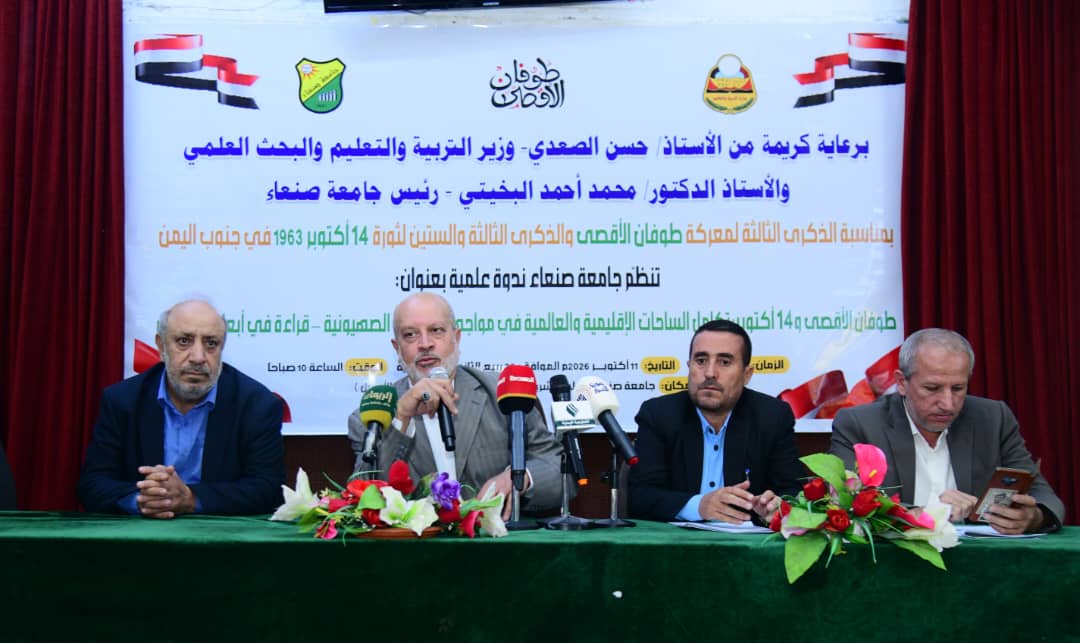
The dissertation defense was attended by a number of academics, postgraduate students, researchers, as well as the researcher's colleagues and family members.
PhD Degree Awarded to Researcher Yasser Khaled Al-Qulaisi in Public Law
19 views
721 words
4 min read