Tuesday, September 8, 2026
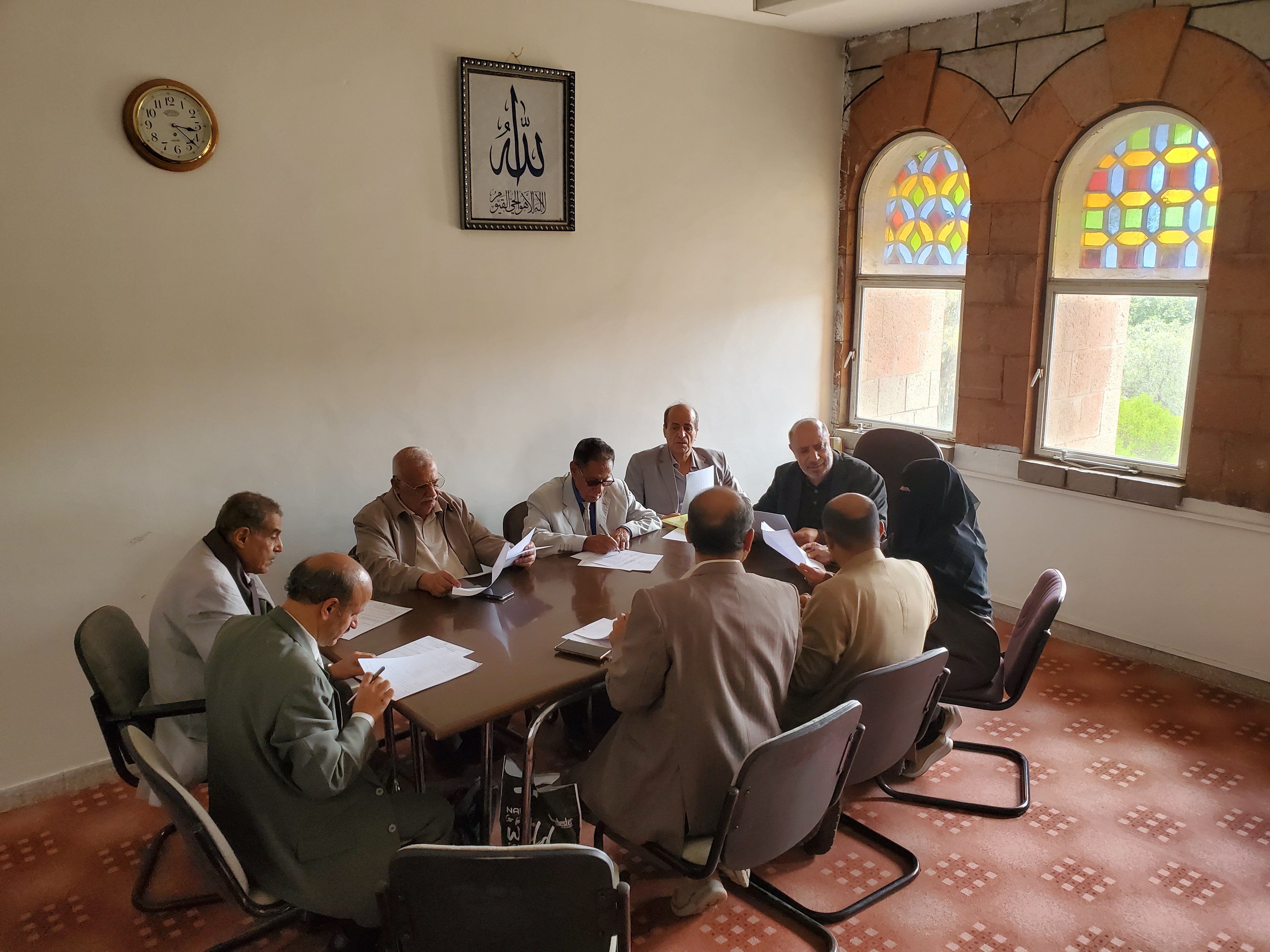
SANA'A — Under the auspices of Prof. Mohammed Ahmed Al-Bukhaiti, Sana'a University Rector, the Faculty of Sharia and Law—in collaboration with the Academic Development Center and Quality Assurance—hosted a workshop on Tuesday, September 8, 2026 to unveil and approve the faculty’s Ph.D. programs.
The workshop was attended by Dr. Mohammed Saad Najad, Dean of the Faculty of Sharia and Law; Dr. Huda Al-Emad, Dean of the Academic Development Center and Quality Assurance; Dr. Ismail Al-Wadhaf, Vice Dean for Graduate Studies; and Dr. Mohammed Al-Mahbashi, Vice Dean for Quality Assurance. They were joined by a distinguished group of faculty professors, judges, lawyers, and legal scholars.
Key academic and legal figures participated in the event, including Judge Dr. Essam Al-Samawi, former Chairman of the Supreme Judicial Council and former President of the Supreme Court, alongside experts and stakeholders in academic and legal affairs.
The workshop evaluated the proposed Ph.D. program documentation across three primary academic tracks: Islamic Sharia, Public Law, and Private Law. Participants reviewed the curriculum content, program structure, and objectives, assessing their alignment with academic standards and graduate study requirements.
Discussions highlighted the stature of the Faculty of Sharia and Law, emphasizing its academic role in qualifying specialized personnel in Sharia and legal studies, as well as its ongoing contributions to bolstering Yemen’s judicial and legal institutions with qualified scholarly and professional expertise.
The event featured extensive discussions and interventions regarding the scientific and academic aspects of the program documentation. Attendees provided constructive feedback and recommendations to refine the documents and enhance program quality and learning outcomes.
Participants stressed that the Ph.D. programs must remain flexible and responsive to developments in the legal and Sharia fields. They emphasized that graduate research should directly address real-world issues and societal needs.
The workshop concluded with a recommendation to formally approve the Ph.D. programs across all three tracks. Attendees reiterated the importance of leveraging scientific research to serve the community, advocating that doctoral dissertation topics be directly tied to the practical needs of the labor market and the legal and judicial sectors.
Furthermore, participants emphasized directing academic research toward producing applied studies that advance legal and judicial practice while resolving challenges faced by institutions and society.
The workshop outcomes affirmed the continuous development of graduate programs at the Faculty of Sharia and Law, aiming to elevate its academic standing, enhance program quality, and maximize its contribution to the justice system, legal sector, and scientific research.
At the conclusion of the workshop, attendees expressed positive impressions regarding the organization and caliber of discussions. They underscored the importance of continuing such academic initiatives that bridge university expertise with judicial and legal practice to establish graduate programs deeply rooted in societal realities and practical requirements.
Sana'a University Reviews Approval of Ph.D. Programs at the Faculty of Sharia and Law*
15 views
468 words
3 min read